
Last updated November 2, 2026
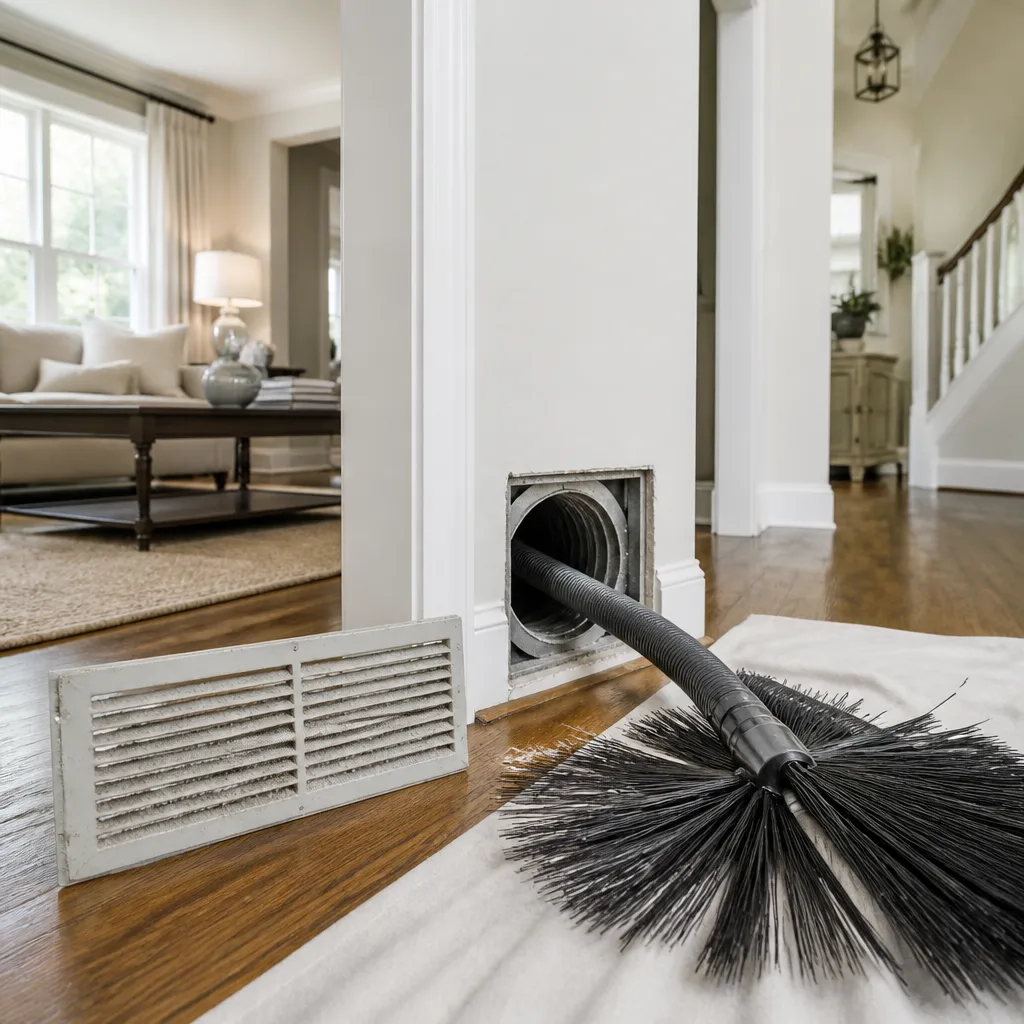 Whole-home duct cleaning
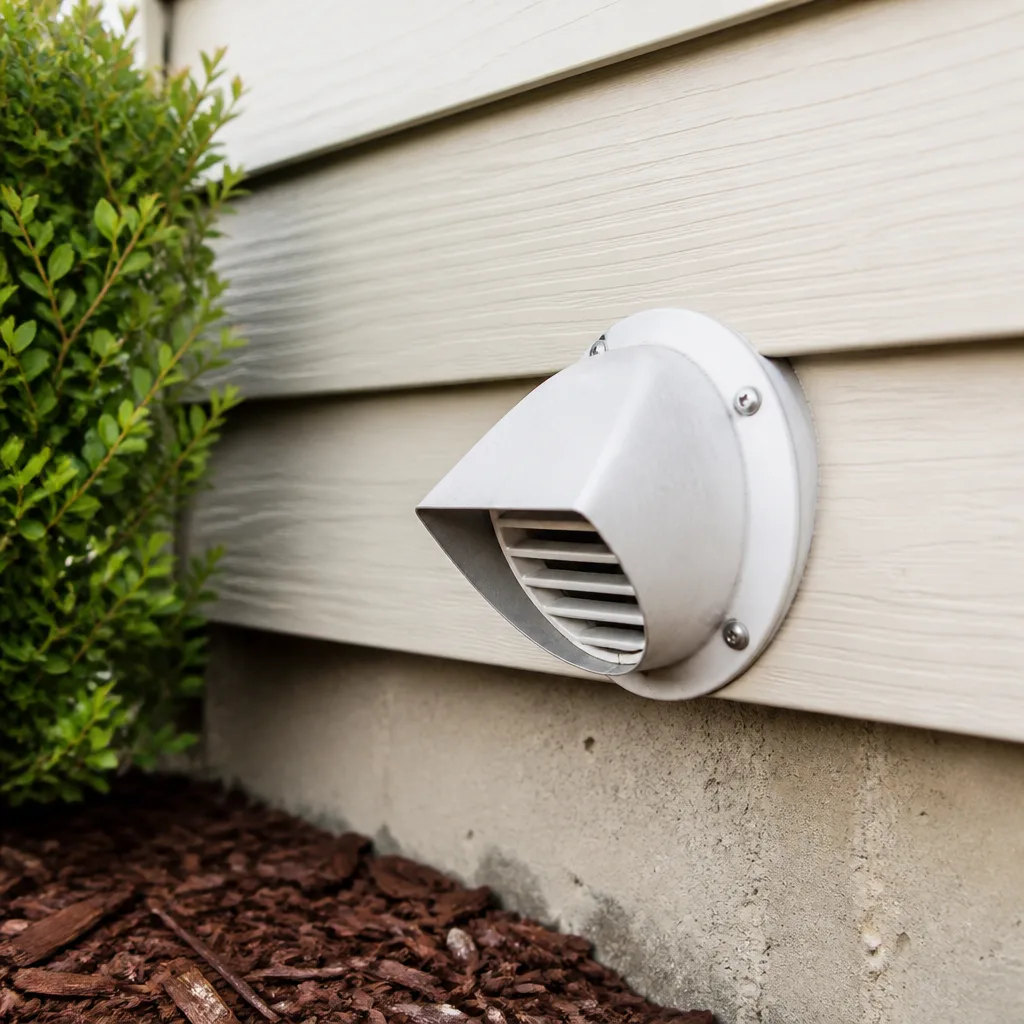 Dryer vent cleaning
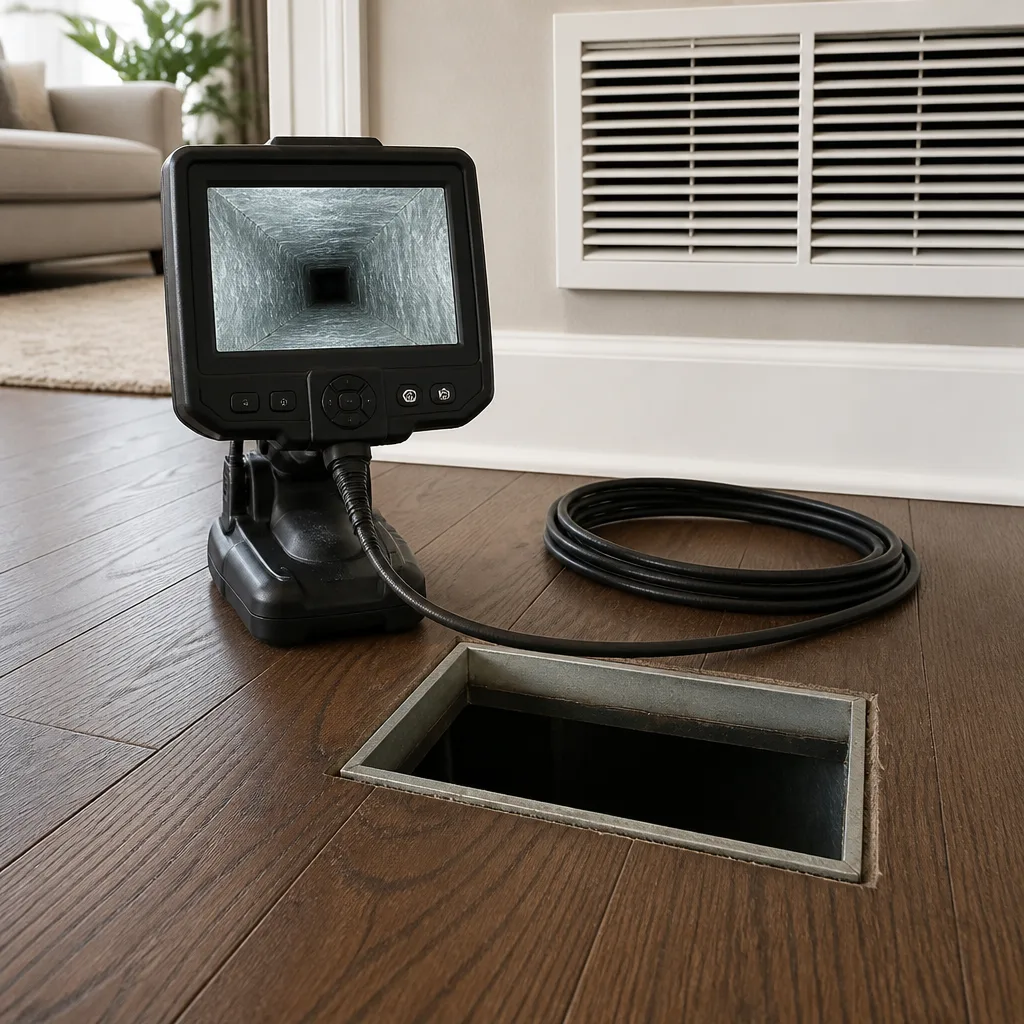 Camera inspection
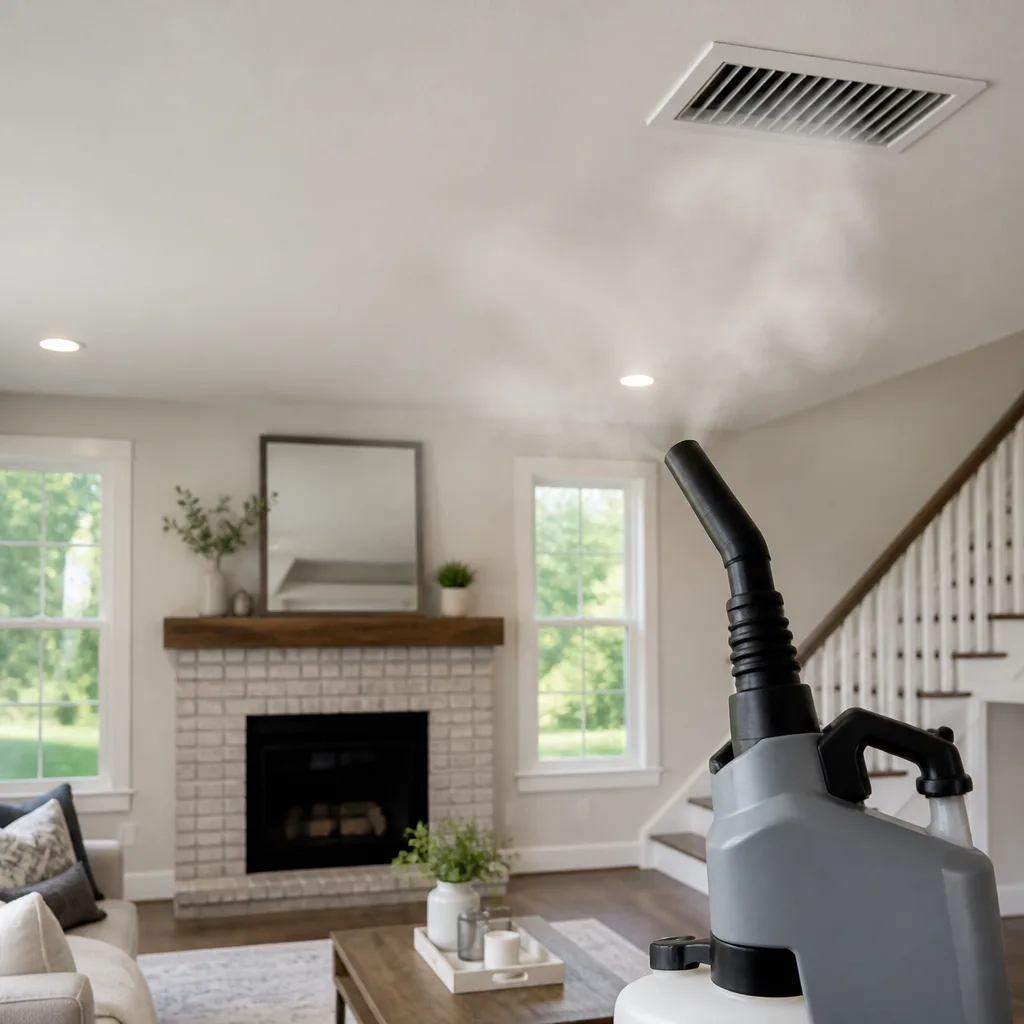 Sanitizing & deodorizing
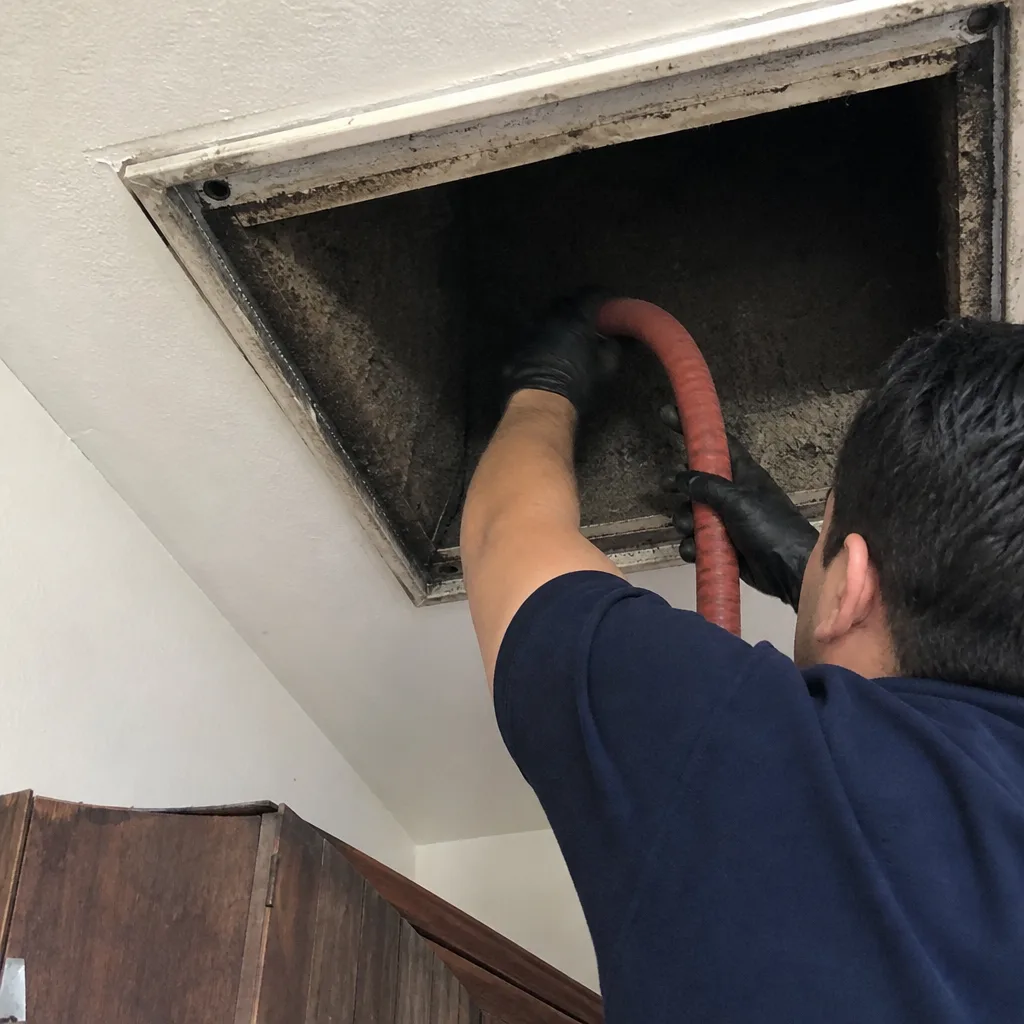
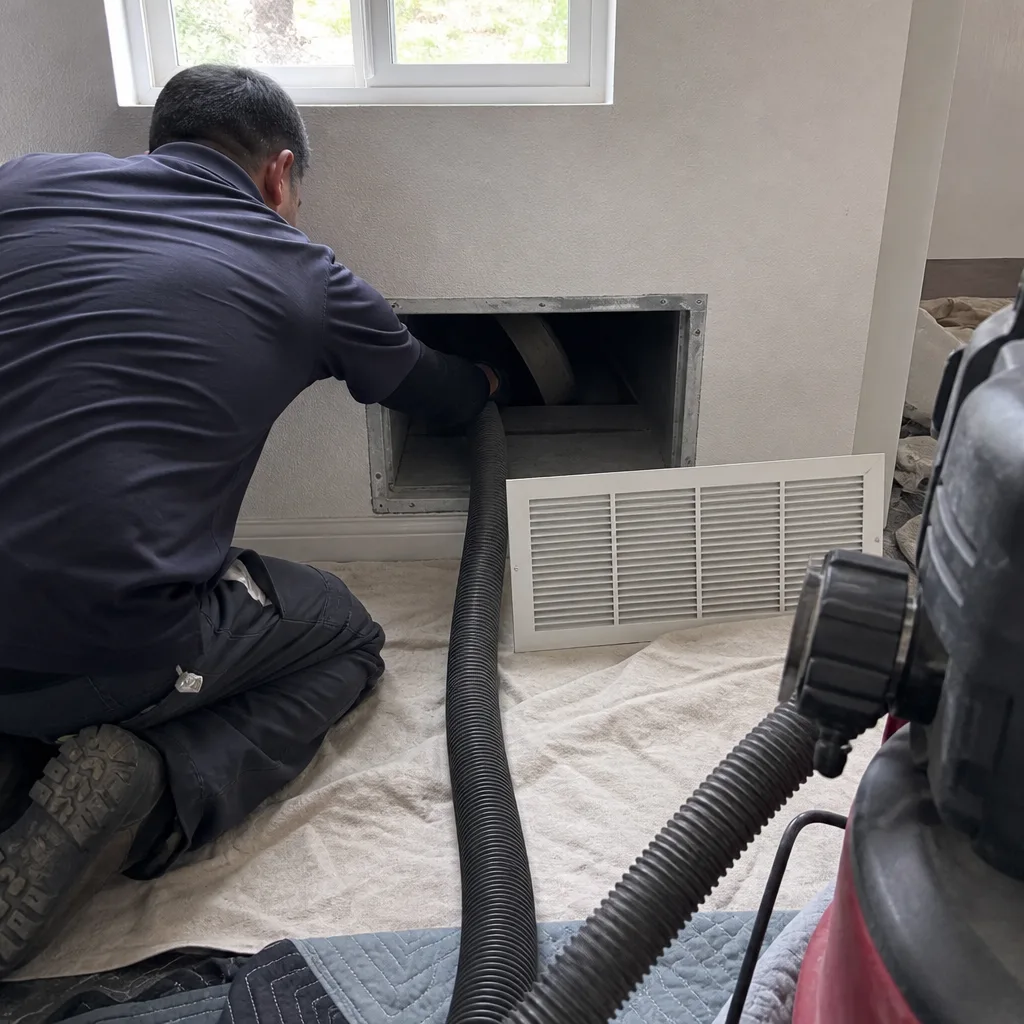
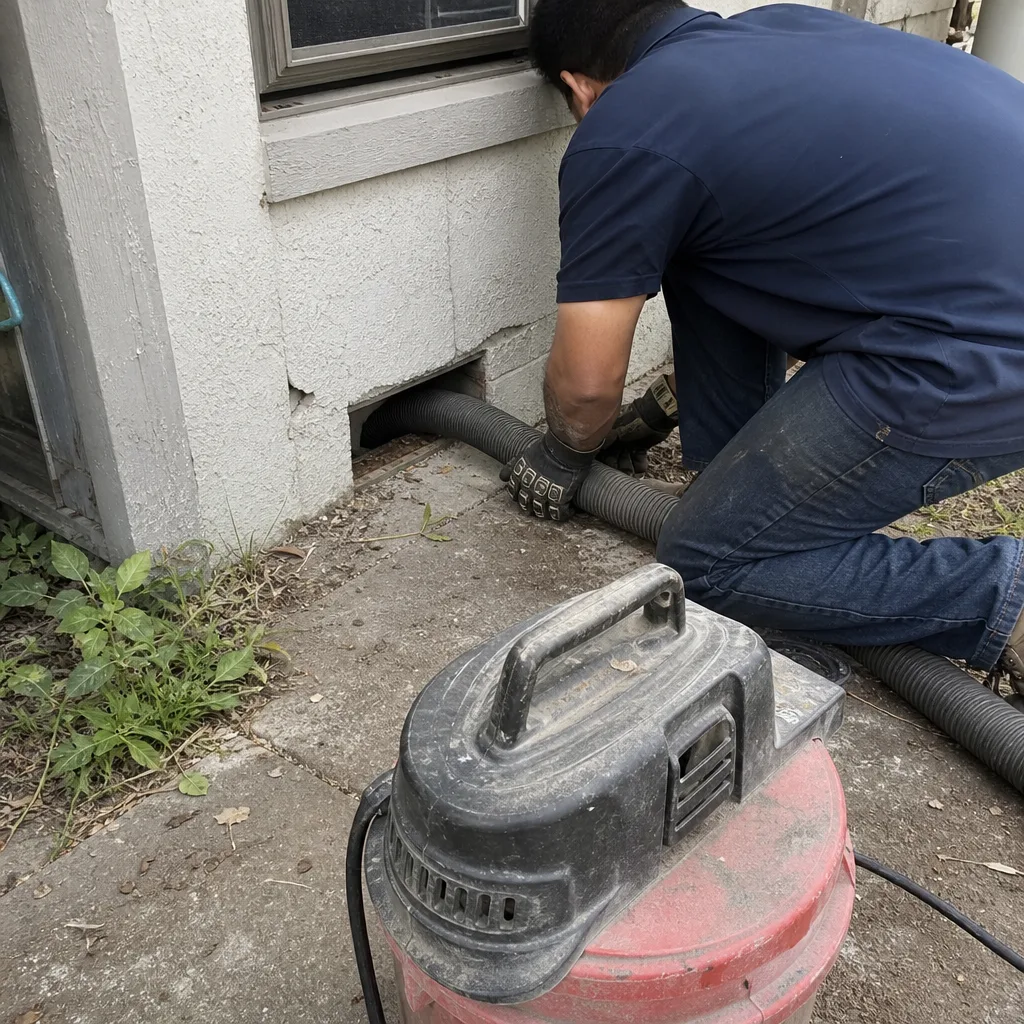
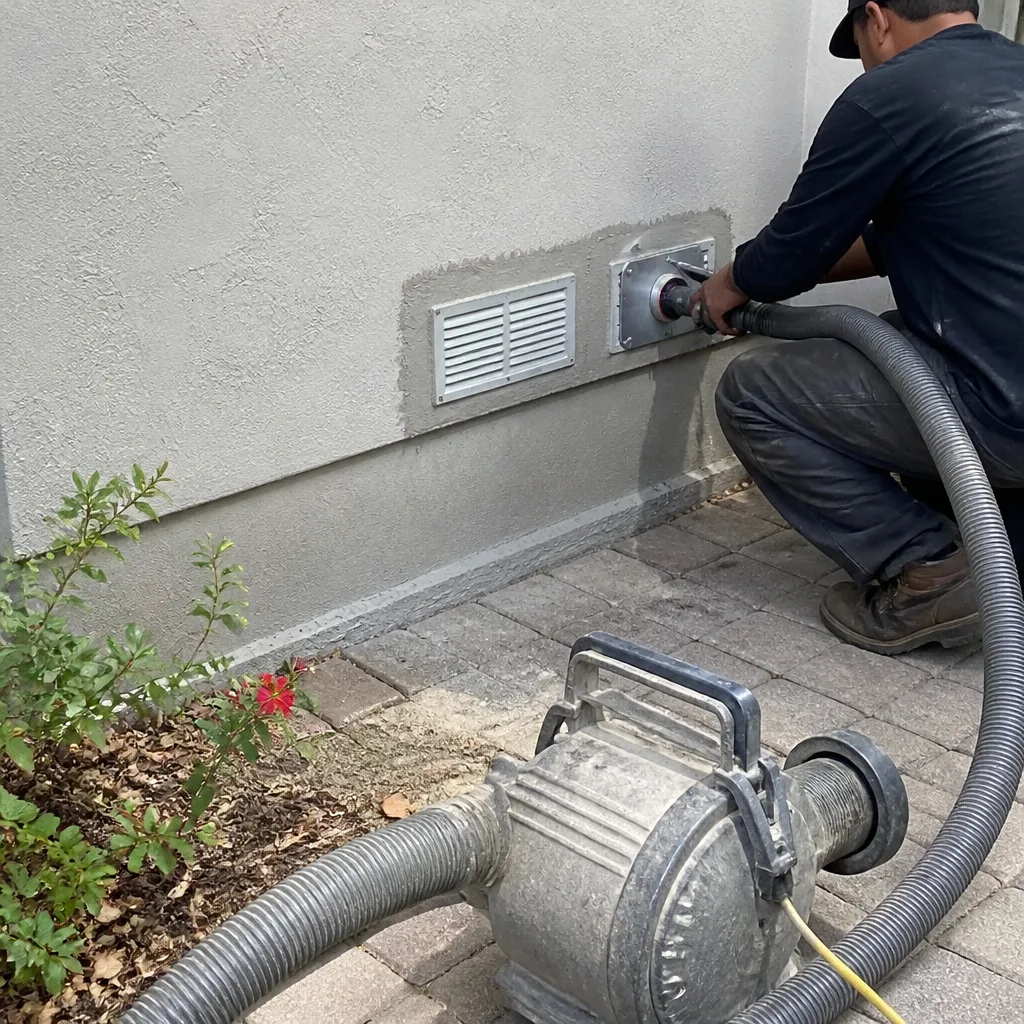
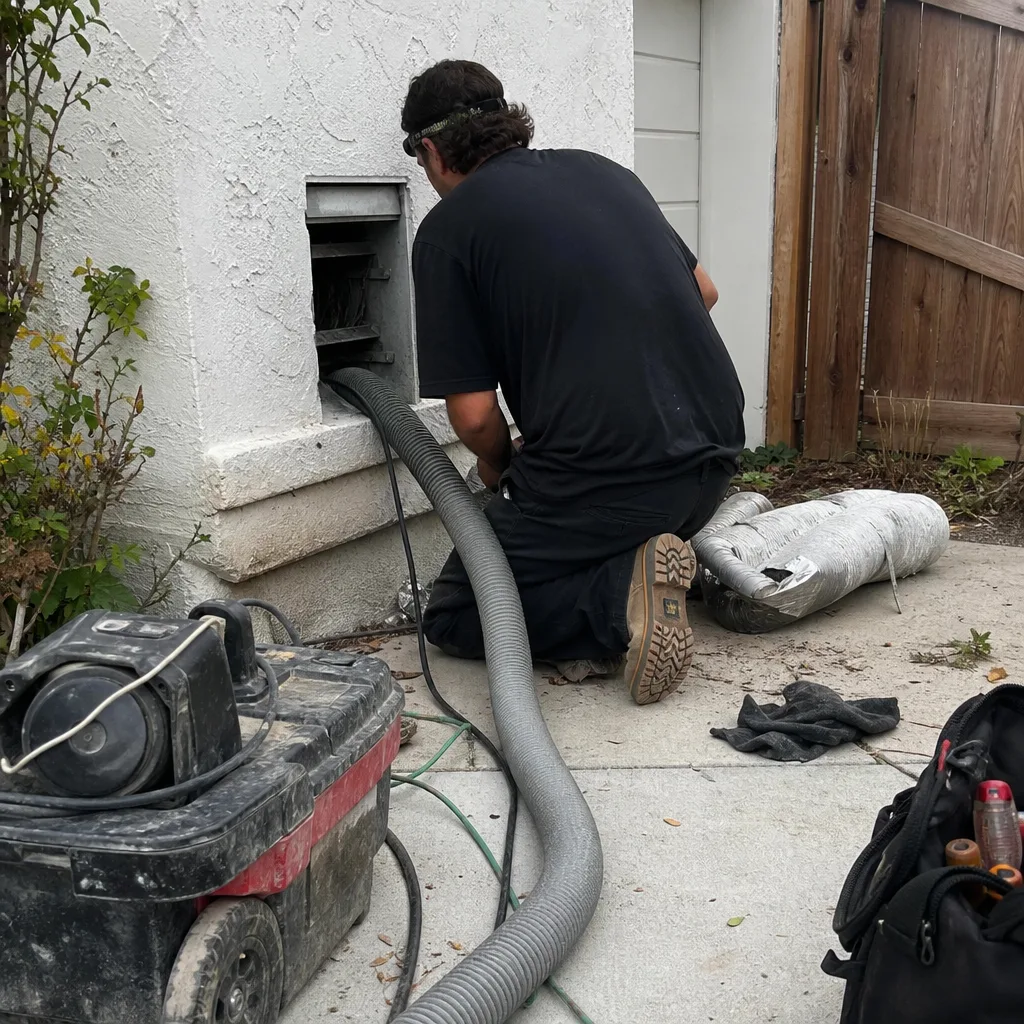
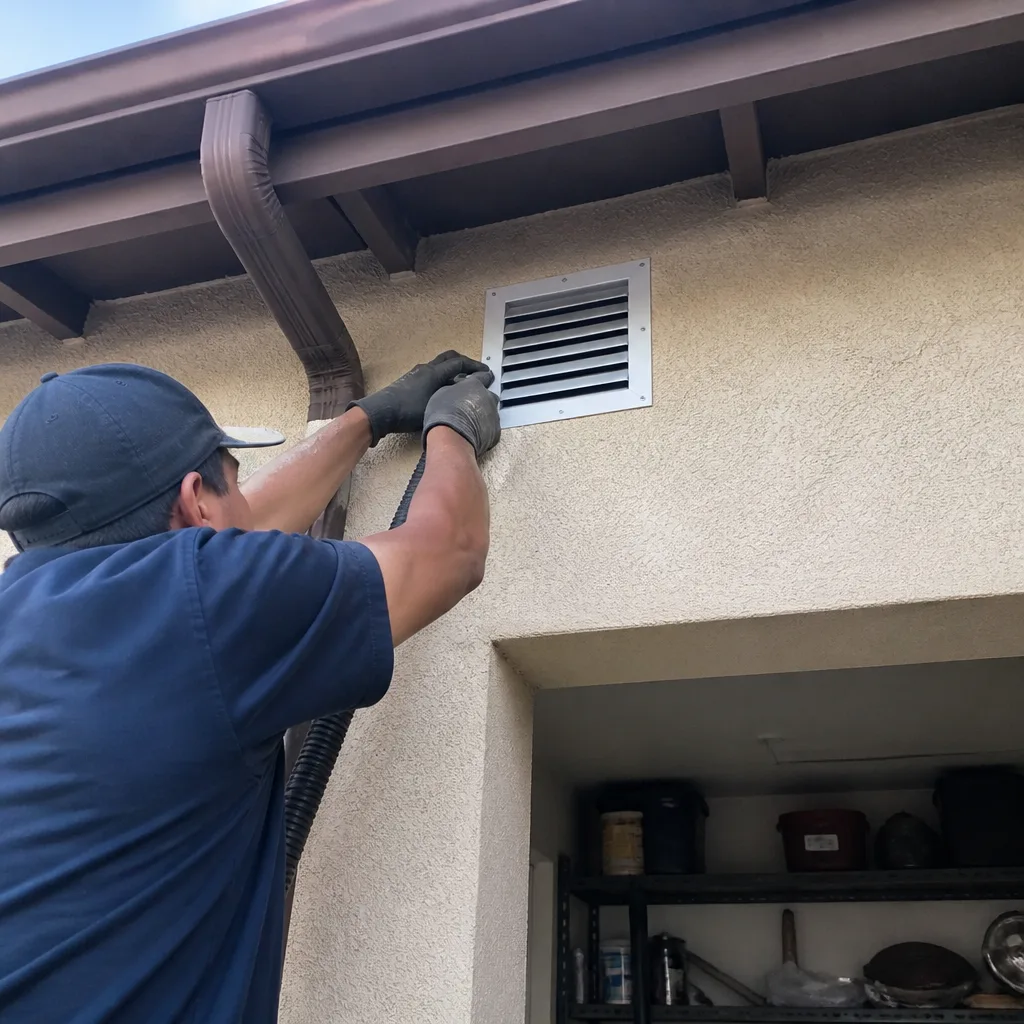
Whole-system duct and dryer vent check with before-and-after photos - you see exactly what came out of your vents
That "$99 whole-house special" is a bait ad - the real number appears once they are in your hallway, or the "clean" is a shop-vac at the register. We photograph the inside of your ducts before and after instead.
How to Hire an Air Duct Cleaning Contractor in Pacific Beach: A Step-by-Step Guide
A five-star review doesn’t tell you whether a contractor uses negative-pressure containment or a shop vac with a brush attachment. Those two approaches produce completely different results, and most homeowners in Pacific Beach can’t tell the difference until months later, when the dust settles back into the registers or a musty smell creeps back into the hallway. This guide will teach you how to evaluate a duct cleaning contractor on technical specifics: equipment, process, documentation, and scope. By the end, you’ll know exactly which questions to ask before anyone steps foot in your home, and why a focused specialist beats a generalist every time.
Styles & brands we work with
- Whole-home duct cleaning
- Dryer vent cleaning
- Camera inspection
- Sanitizing & deodorizing
Quick Answer
To hire an air duct cleaning contractor in Pacific Beach, ask three things: what equipment they use (look for negative-pressure systems from Rotobrush or Nikro, not a portable shop vac), whether they provide before-and-after photos of your actual ducts, and whether duct cleaning is their primary service or just one line item on a long list. Request a flat-rate quote for your entire system, verify NADCA membership, and avoid any company that prices per vent. A specialist with professional-grade equipment will cost more than the $49 coupon crew, and the difference shows up in your air quality and system efficiency for years afterward.
Table of Contents
- The Single Question That Separates Specialists from Generalists
- Equipment to Ask About by Name: Truck-Mounted vs. Portable Negative-Pressure Units
- Red Flags in Quotes: What a Legitimate Bid Should and Shouldn’t Include
- How to Verify NADCA Membership and What It Actually Requires
- The Pacific Beach Service Market: Why Local Climate Changes the Math
- Why the Cheapest Quote in Pacific Beach Almost Always Leaves Debris Behind
- The 10 Questions to Ask Before You Sign Anything
- What a Finished Job Should Look Like: Verification and Documentation
- Common Mistakes to Avoid
- When to Call a Professional
- Frequently Asked Questions
- The Bottom Line
The Single Question That Separates Specialists from Generalists
Ask any contractor this: “Is air duct cleaning your primary service, or is it one of many services you offer?” The answer tells you more than any review. A generalist HVAC company in Pacific Beach might list duct cleaning alongside furnace replacement, AC repair, water heater installation, and a dozen other trades. Their techs are split across those jobs all week. A specialist, by comparison, thinks about duct systems every single day. The distinction matters because duct cleaning is a craft of its own: understanding airflow dynamics, identifying contamination patterns, working around tight attic spaces in coastal homes, and knowing when cleaning alone won’t fix a problem that actually requires air duct repair in Pacific Beach.
In our experience, the generalist approach usually means a rotating cast of technicians, rental equipment, and a checklist mentality. The specialist approach means the same crew, the same equipment, and a process refined over thousands of homes. When someone spends their entire working week on duct systems, they notice things a part-time duct cleaner misses: a disconnected return in a crawlspace, a crushed flex line behind a wall, a dryer vent that’s been venting into an attic for years. Generalists don’t flag these because they’re not looking for them. Specialists flag them because they’ve seen them a hundred times in Pacific Beach’s older coastal bungalows and 1970s-era condos.
You can spot the difference in how a company talks about the work. A generalist says “we clean ducts.” A specialist talks about negative pressure, air washing, agitation devices, access points, and containment. The vocabulary is a signal, not jargon for its own sake. It tells you the person on the phone understands what happens inside your ductwork, not just how to schedule a van.
Equipment to Ask About by Name: Truck-Mounted vs. Portable Negative-Pressure Units
Duct cleaning equipment falls into two broad categories, and the difference has real consequences for your home in Pacific Beach. A truck-mounted unit is exactly what it sounds like: a powerful vacuum system mounted in or on a service vehicle, connected to your duct system through a large hose run through a window or door. These units generate significant negative pressure and airflow, typically 10,000 to 15,000 CFM (cubic feet per minute). Portable units, by contrast, sit inside your home and move air at a fraction of that rate, usually 2,000 to 4,000 CFM. Both can work, but the application matters.
Here’s what to ask by name:
- What brand of negative-pressure equipment do you run? Purpose-built systems from Rotobrush and Nikro are designed specifically for duct cleaning. They integrate agitation tools with vacuum collection, so debris is loosened and extracted simultaneously. A generic truck-mounted vacuum retrofitted from a carpet cleaning rig isn’t the same tool.
- Is your unit truck-mounted or portable? For a typical Pacific Beach home, either can work, but a powerful truck-mounted system generally achieves better debris removal in larger systems or when ductwork hasn’t been cleaned in years. For condos and multi-story buildings where a truck can’t park close, a quality portable negative-pressure unit is the practical choice. What matters is that the contractor can explain why they use what they use for your specific home.
- What agitation method do you use? Vacuum alone won’t remove debris stuck to duct walls. Professional systems use air whips, rotating brushes, or skipper balls to dislodge buildup before extraction. If a contractor can’t name their agitation tool, they’re planning to vacuum and leave.
- Do you use containment during the job? Proper containment means sealing off registers, using negative pressure to prevent dust from escaping into living spaces, and protecting flooring and furnishings. Products from Abatement Technologies are built for this exact purpose. If a contractor shrugs at the word “containment,” walk away.
The square footage of your Pacific Beach home matters here too. A compact 900-square-foot beach cottage with one trunk line and a handful of runs is a different job than a 3,500-square-foot Crown Point home with multiple zones and a return in every room. A contractor should be able to tell you how their equipment matches your system’s size. That’s the kind of technical specificity that separates a real duct cleaning company from a guy with a van and a hose.
Red Flags in Quotes: What a Legitimate Bid Should and Shouldn’t Include
Duct cleaning quotes in Pacific Beach run the full spectrum, from $49 bait-and-switch specials to $900 whole-house jobs. The price itself tells you less than the structure of the quote. Here’s what to watch for:
Red flag #1: Per-vent pricing. A quote that says “$12 per vent” or “$20 per register” is a red flag by itself. Honest duct cleaning is priced as a whole-system job. Per-vent pricing incentivizes the contractor to rush through vents, skip secondary lines, or “discover” more vents than you actually have. Flat-rate pricing, agreed before work starts, is the standard for professional companies. One flat price per system means the tech’s incentive is to do the job right, not to count openings.
Red flag #2: No mention of access points. Professional duct cleaning requires cutting access holes into the main trunk lines to insert cleaning tools, then sealing those access points with proper caps. A quote that doesn’t mention access creation either means the contractor plans to work only through your existing registers (a shortcut that leaves trunk lines uncleaned) or they’re going to surprise you with extra charges when they “find” the need for access on site. Ask explicitly: “Does this quote include cutting and sealing access points?”
Red flag #3: Upsell pressure baked into the job. Some companies use duct cleaning as a loss leader to get in the door, then pivot to mold remediation, UV light installation, or filter replacement at aggressive margins. To be clear: a legitimate company will tell you if they find something genuinely wrong, and air duct repair is a real service that sometimes becomes necessary. But if the tech’s clipboard comes out with a laminated upsell menu before the cleaning even starts, you’re in a sales call, not a service call.
Red flag #4: No before-and-after documentation. A professional job ends with proof. You should receive before-and-after photos of your actual ducts, not stock images. If a company can’t or won’t provide photo documentation, you have no way to verify any work happened at all. This is one of the most common complaints about discount duct cleaners in Pacific Beach: the invoice arrives, the van leaves, and the homeowner never sees the inside of a single duct.
What a legitimate quote includes: total system price, number of access points, equipment type, estimated duration, containment plan, and documentation deliverables. If any of those are missing, ask. If you get a vague answer, move on.
How to Verify NADCA Membership and What It Actually Requires
NADCA, the National Air Duct Cleaners Association, is the industry’s primary standards body. Membership signals that a company has committed to a recognized cleaning standard, but like any credential, it’s worth understanding what it does and doesn’t guarantee.
A NADCA member company is expected to follow the association’s ACR (Assessment, Cleaning, and Restoration) standard, which specifies how duct systems should be inspected, cleaned, and verified. The standard covers methodology: source removal (removing debris at its origin, not just pushing it downstream), proper agitation, negative-pressure extraction, and post-cleaning verification. Membership also requires companies to carry appropriate insurance and to have at least one Air Systems Cleaning Specialist (ASCS) certification on staff at the time of certification.
Here’s how to verify a NADCA claim:
- Go to NADCA’s member directory at nadca.com and search for the company name. Don’t rely on the logo on their website; anyone can paste a logo.
- Ask for the ASCS certification number of the technician who will actually do the work. Not the owner’s, not a manager’s. The person in your attic.
- Ask what the ACR standard requires for your home. A real member can explain source removal, agitation, and negative pressure in their own words. If they can’t, they’re using the logo without the knowledge.
NADCA membership isn’t a guarantee of quality. But it is a useful filter. It tells you the company has invested in training and committed to a documented standard. When combined with equipment-specific questions and a review of their documentation practices, it forms a solid baseline for evaluating any Pacific Beach contractor.
The Pacific Beach Service Market: Why Local Climate Changes the Math
Pacific Beach homes have a particular relationship with duct contamination. The coastal air is damp and salt-laden. Marine layer mornings push moisture into crawlspaces and attics. Homes built before the 1980s often have ductwork running through unconditioned spaces where condensation forms on metallic surfaces. That combination, moisture plus organic debris, is exactly what feeds the kind of grimy buildup that standard vacuuming can’t fully remove.
This matters when you’re hiring because a contractor from outside the area may not understand the local conditions. A duct cleaner who works mostly inland, where attics are dry and dust is the primary contaminant, approaches the job differently than one who knows that PB register grilles corrode faster, that beach-adjacent homes on Mission Boulevard accumulate sand fines in return ducts, and that older condos along Grand Avenue often have shared duct chases with decades of deferred maintenance. None of this appears in a generic national franchise playbook.
Local experience also means understanding the housing stock. Pacific Beach is a mix of 1920s beach bungalows, mid-century apartment buildings, 1970s condos, and newer construction. Each era has characteristic duct problems: disconnected joints in pier-and-beam foundations, collapsing flex in hot attics, undersized returns in converted multi-unit buildings. A contractor who has worked these blocks before recognizes the pattern in the first ten minutes of inspection. A contractor who hasn’t is learning on your dime.
For a deeper look at how duct cleaning works in this specific market, see our full guide on air duct cleaning in Pacific Beach. It covers the cleaning process itself, what to expect on the day of service, and how long a typical PB job takes.
Why the Cheapest Quote in Pacific Beach Almost Always Leaves Debris Behind
The economics of cheap duct cleaning are simple and brutal. A company offering whole-house cleaning for $99 or $149 has to complete the job in under two hours to make money. That’s not enough time to cut access points, agitate all trunk lines, clean every branch run, extract the debris, seal the access points, and document the work. Not even close. So what actually happens?
They vacuum what they can reach through the registers, which covers maybe 60% of the visible interior surfaces, and none of the trunk lines. The secondary trunk lines, the ones that run perpendicular to the main supply and carry air to distant rooms, never get touched. The return side, especially long returns in older PB homes, gets a token pass. The debris that sits in those distant reaches, the accumulated dust, pet hair, sand, and construction residue, stays exactly where it was. But the visible registers look cleaner, and the invoice gets paid.
We’ve followed behind discount cleanings in Pacific Beach more times than we can count. The homeowner calls because the “cleaning” didn’t change anything: still dusty, still sneezing, still that musty smell from the vents when the AC kicks on. When we open the system, we find the trunk lines exactly as clogged as they were before, now with a fresh layer of disturbance dust on top. The cheap cleaning didn’t just fail to clean; it made the problem worse by loosening debris that then spread through the house.
Amortize the cost properly. A $450 professional cleaning that actually removes the debris lasts three to five years. A $99 cleaning that doesn’t work means you pay $99 now and $450 later, plus months of breathing whatever the discount crew stirred up. The math isn’t complicated once you understand what the cheap quote is actually buying, which is mostly the van’s drive time and the tech’s lunch break.
The 10 Questions to Ask Before You Sign Anything
Here’s the full qualifying script. Ask every one of these, in order, before you agree to any duct cleaning in Pacific Beach:
- Is air duct cleaning your primary service? If the company also installs water heaters, replaces roofs, and paints exteriors, keep looking.
- What equipment do you use, and is it truck-mounted or portable? Listen for the names. Rotobrush and Nikro are purpose-built duct cleaning systems. Vague answers are red flags.
- Do you cut access points into the trunk lines? If the answer is no or “we work through the registers,” the trunk lines won’t be cleaned.
- Is your pricing flat-rate for the whole system? Per-vent pricing is a structural incentive to rush. One flat price per system is the professional standard.
- Do you provide before-and-after photos of my actual ducts? No photos, no proof. This is non-negotiable.
- Are you a NADCA member, and who holds the ASCS certification? Verify the membership on the NADCA website and ask for the certification number of the tech doing the work.
- What containment methods do you use? Negative pressure, register sealing, and floor protection. They should have a specific answer.
- How long will the job take? A real whole-house cleaning in a typical Pacific Beach home takes four to six hours. Quotes under two hours are telling you something.
- What happens if you find damage during the job? A professional documents the issue, explains your options, and can handle air duct repair if needed. A salesperson practices the upsell.
- Do you also clean dryer vents? Not as an afterthought, but as a real service. Lint-clogged dryer vents are a documented fire hazard, and a duct specialist should treat dryer vent cleaning in Pacific Beach with the same seriousness as duct work. A company that treats it as a casual add-on is signaling their overall approach.
Write the answers down. Compare them across two or three companies. The differences will be obvious.
What a Finished Job Should Look Like: Verification and Documentation
A professional duct cleaning in Pacific Beach should end with you knowing, not hoping, that the work was done. Here’s what a complete job delivers:
Before-and-after photos. You should receive photos of the inside of your main trunk lines, branch runs, and returns. The “before” shots should show the actual contamination. The “after” shots should show clean metal or flex surfaces. These should be your ducts, not stock photos pulled from a website. If the contractor’s camera is “broken,” or they “forgot to bring it,” you have no verification. Don’t accept that.
Access point sealing. Every access hole cut into your ductwork should be sealed with a proper metal cap, fastened and sealed to prevent air leakage. You should be able to point to where the access points were created. If you can’t find them, ask. An unsealed access point is a leak in your system, full stop.
A walkthrough of what was found. The tech should tell you what they found in your ducts: pet hair, construction debris, sand, mold-adjacent moisture, duct damage. You should know if they found a disconnected return or a crushed flex line. A silent crew that leaves an invoice and drives off is not a professional operation.
Recommendations that make sense. If they suggest air duct repair, they should be able to show you why with photos and explain the consequence of not doing it. If they suggest filter upgrades, that’s a legitimate conversation about products from Honeywell or Aprilaire, which are respected names in filtration. But every recommendation should be backed by evidence from your specific system, not a script.
Filter guidance. A professional should ask about your current filtration setup and make a recommendation appropriate to your home and your household’s needs. This isn’t an upsell; it’s the difference between cleaning your ducts and keeping them clean. Honeywell and Aprilaire make the filters and media systems we commonly recommend. Whatever the brand, the recommendation should be specific to your system, not a one-size-fits-all pitch.
Common Mistakes to Avoid
- Hiring on review count alone. A five-star average from 200 customers tells you the company is polite and punctual. It tells you nothing about whether they clean trunk lines. Ask the equipment questions regardless of how many stars they have.
- Falling for the $49 special. The bait price gets a van to your curb, and then the invoice climbs. By the time you’re quoted the “real” price, you’ve already taken the day off work. Get the true flat-rate quote on the phone before scheduling.
- Not asking about access points. If a contractor works only through registers, they’re leaving the most contaminated part of your system untouched. This is the single most common shortcut in Pacific Beach discount cleaning.
- Skipping the dryer vent. Your dryer vent is part of your home’s air system, and it’s a fire hazard when clogged. Ask if the company handles dryer vent cleaning as a real service. If they don’t, you’re hiring a second contractor to do what should be one appointment.
- Accepting “we don’t do photos.” No photos, no proof, no exceptions. A professional company documents its work. Period.
- Not asking who does the actual work. The person who answers the phone might be knowledgeable; the person in your attic might be a subcontractor with no training. Ask who will be doing the work and what certification they hold.
- Choosing price over process. In Pacific Beach, the spread between a real cleaning and a fake one is a few hundred dollars. Spread over the three to five years a professional cleaning lasts, the difference is pennies per day. Buy the process, not the discount.
When to Call a Professional
You should call a duct cleaning professional in Pacific Beach if you’ve never had your ducts cleaned and your home is more than five years old, if you see visible dust blowing from your registers when the system kicks on, if you’ve done recent remodeling that generated drywall dust and debris, if you have persistent allergy symptoms that improve when you leave the house, or if you notice a musty odor from your vents when the AC or heat runs. These are signs of a real contamination problem, not a marketing opportunity. If you suspect your Fairway Air Duct Cleaning home-level attention is needed, start with a professional assessment. Fairway Air Duct Cleaning offers free estimates in Pacific Beach – call (866) 241-3526 to schedule one. We’ll inspect your system, document what we find, and give you a flat-rate quote before any work begins.
Frequently Asked Questions
Air duct cleaning in Pacific Beach typically costs between $350 and $700 for a whole-house system, depending on home size, number of zones, access difficulty, and how long the system has gone without cleaning. Small condos and beach cottages fall on the lower end; large Crown Point homes with multiple returns run higher. Legitimate companies quote one flat price per system, not per vent. Call (866) 241-3526 for a free estimate on your specific Pacific Beach home.
Cheaper quotes are cheaper because the company plans to do less work: no access points cut into trunk lines, no agitation of branch runs, no containment, no documentation. The economics of a $99 cleaning require finishing in under two hours, which is physically impossible for a real whole-system job. The cheap company knows you can’t see inside your ducts, so you won’t know the difference until the symptoms return. Then you pay for the real cleaning anyway.
You know because the contractor provides before-and-after photos of your actual duct interiors, shows you where access points were cut and sealed, and gives you a verbal summary of what was found and removed. A professional job is documented from start to finish. If a company can’t provide that documentation, assume the work wasn’t done properly, regardless of what the invoice says.
Most Pacific Beach homes benefit from professional duct cleaning every three to five years. Homes near the beach, where salt air and marine-layer moisture accelerate buildup on duct surfaces, may lean toward the shorter end of that range. Homes with shedding pets, recent remodeling, or allergy-sensitive occupants may also need more frequent service. No home needs annual duct cleaning, and any company pushing a yearly schedule is selling a subscription, not a service.
Filters protect your HVAC equipment, not your ductwork. A quality filter from Honeywell or Aprilaire will catch a significant percentage of airborne particles before they enter the system, but what gets past the filter and into the ducts still accumulates over time. Regular filter changes slow the accumulation; they don’t eliminate it. Duct cleaning addresses the years of buildup that filters couldn’t catch, plus anything that entered through return leaks or construction work.
No, you don’t. A focused duct specialist should handle dryer vent cleaning in Pacific Beach as a core service, not a side add-on. The same negative-pressure equipment and the same containment discipline apply to both jobs. Hiring one company for both means one appointment, one flat-rate quote, and one point of accountability for your home’s entire air system.
The Bottom Line
Hiring an air duct cleaning contractor in Pacific Beach comes down to one decision: do you want a checkmark service from a generalist, or a real cleaning from a specialist? The specialist asks about access points, uses negative-pressure equipment from Rotobrush or Nikro, documents the work with before-and-after photos, and quotes one flat price per system. The generalist counts vents, works through registers, and leaves the trunk lines untouched. The price difference between these two approaches is maybe three hundred dollars. The performance difference is everything: cleaner air, better system efficiency, and proof the job was done. Ask the questions. Verify the answers. Hire the specialist.
Written by the team at Fairway Air Duct Cleaning, serving Pacific Beach since 2014.
See the difference
 Before
 After
 Before
 After
 Before
 After