
Rotobrush Air Duct Cleaning in Pacific Beach: A Homeowner’s Guide
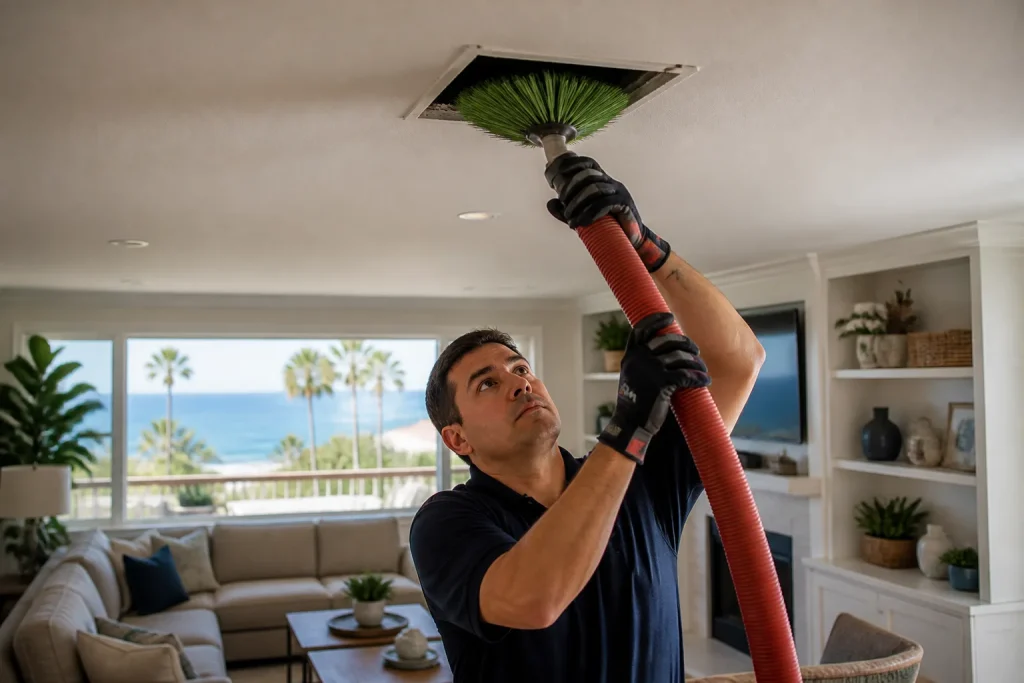
Rotobrush is a brand name, not a cleaning standard. The system works by spinning a brush head inside your ducts while a vacuum pulls debris out at the same time. That combination matters more than most homeowners realize. If you’re researching Rotobrush air duct cleaning in Pacific Beach, here’s what you actually need to know before anyone puts a spinning brush into your ductwork.
And if you’d rather skip the research and talk to someone who runs this equipment daily, call (866) 241-3526 for a straight answer.
Key Takeaways
- Rotobrush is a tool brand, not a magic process. The result depends on brush selection, operator skill, and whether it’s even the right tool for your duct material.
- Pacific Beach homes frequently mix rigid metal duct and flex duct in the same system. A rotary brush that’s fine on metal can tear thin flex duct if the technician doesn’t check first.
- Simultaneous brush-and-vacuum beats brush-only or air-whip-only methods for actual debris removal, not just loosening it.
- Ask any contractor three questions before they start: What material are my ducts made of? What brush type are you using? Will you show me before-and-after photos of my own system?
What Rotobrush Actually Does, Mechanically Speaking
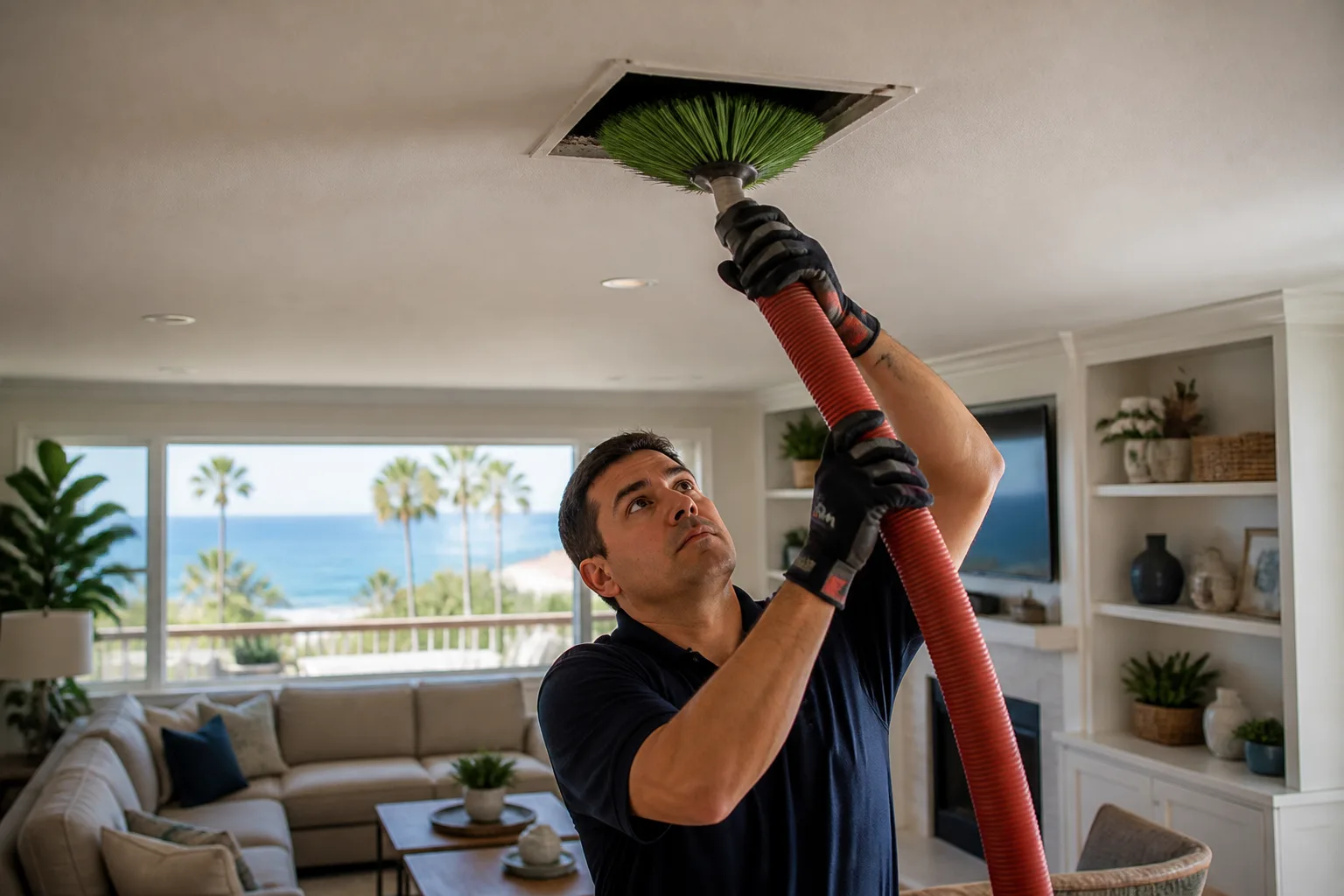
Rotobrush is a rotary brush system. A spinning brush head attaches to a flexible shaft, and the brush agitates the interior walls of your ducts while a high-powered vacuum extracts loosened debris at the same time. That simultaneous action is the meaningful part. Here’s why it matters in Pacific Beach specifically.
Coastal air carries moisture and salt. Duct systems near the ocean collect a different kind of debris than inland homes do: a mix of sand, salt-air residue, and the usual household dust and pet hair. That combination settles and adheres to duct walls in a way that a plain vacuum pass won’t remove. You need mechanical agitation to break it loose, and you need vacuum capture happening at the same moment, not after. That’s what the Rotobrush system does, and it’s the reason we run Rotobrush and Nikro equipment rather than consumer-grade vacuums or generic shop tools. We name our equipment because it matters: Rotobrush does simultaneous agitation and extraction, and that’s the difference between moving dust around and removing it.
Compare that to brush-only systems, which loosen debris but leave it airborne for your HVAC system to redistribute, or air-whip systems, which blast compressed air through the ducts but rely on a separate vacuum pass that often misses what the air whip scattered. In our experience across Pacific Beach’s older housing stock, simultaneous extraction is the only approach that consistently leaves ducts measurably cleaner rather than cosmetically cleaner.
Flex Duct Reality in Pacific Beach: When a Rotary Brush Is the Wrong Call
Here’s the part most contractors won’t tell you, and it explains why we wrote this guide. Rotobrush systems can be fitted with different brush types. Some are aggressive enough for rigid sheet metal duct. Others are softer, designed for flex duct. If a technician shows up and runs the same brush head regardless of what’s in your walls, you can end up with torn flex duct, separated joints, and new air leaks you paid to create.
Pacific Beach housing stock skews toward the 1950s through 1980s, with a heavy share of pier-and-beam construction. Many of those homes have had HVAC systems partially updated over the decades. That means one house can have galvanized metal trunk lines feeding into flex duct branches added during a remodel, then more flex duct added when a room was converted. We regularly see systems where the return side is rigid metal and the supply side is mostly flex, or vice versa. There’s no single-brush answer for that house.
A proper Air Duct Cleaning in Pacific Beach job starts with an assessment of what’s actually in your system, then matches the brush type and speed to the material. Thin or damaged flex duct sometimes shouldn’t be brushed at all; it should be cleaned with air-based agitation or simply assessed for replacement if it’s already compromised. The right technician switches methods mid-job when the duct type changes. Ask before they start.
Questions to Ask Any Contractor Before They Run a Mechanical Brush
If you’re getting quotes and Rotobrush comes up, here’s exactly what to ask. These questions separate a specialist from someone renting brand recognition.
- What material are my ducts made of? If they can’t answer, they haven’t inspected anything. Walk away.
- What brush type are you using, and does it match my duct material? A professional will explain this without hesitation. Rotobrush sells multiple brush configurations for a reason.
- How do you handle transitions between duct types? In a Pacific Beach home with mixed metal and flex duct, this is a real question with a real answer. “We use the same brush on everything” is the wrong answer.
- Will you show me before-and-after photos of my own ducts? Not a stock photo. Photos from your system, taken during the job. If the answer is anything but yes, you have no way to verify the work.
- Do you also repair duct damage if the system reveals it? Because a cleaning job that finds separated flex duct but can’t fix it only solves half the problem. That’s why Air Duct Repair in Pacific Beach matters as a standalone service, not an afterthought.
We pulled a compressed flex duct out of a home over near Tourmaline Street a few months back where a previous cleaning company had run an aggressive metal-grade brush through the entire system. The homeowner called us because her bedroom wasn’t cooling. The duct was collapsed in two places, and the cleaning had scoured the inner liner thin enough to tear. She paid for a cleaning and got an airflow problem. That’s what the wrong brush on the wrong material does.
What a Good Rotobrush Job Looks Like When It’s Done Right
Here’s how to evaluate results after the job, because “it sounds like they vacuumed a lot” is not a metric. A properly done rotary brush cleaning in a Pacific Beach home should show:
- Visible debris removal around supply registers and return grilles. If the registers weren’t removed and cleaned, the job wasn’t finished. Surface-level is not the goal, but register buildup is a reliable indicator of what was happening inside.
- Before-and-after photos from inside the ducts. This is non-negotiable. You should see the duct wall go from dusty or filmed to clean metal or clean flex liner. Different lighting and angles can be misleading, so ask for photos from the same register or access point before and after.
- Measurable airflow improvement where airflow was the problem. This is why we don’t sell air duct cleaning as a health miracle. We sell it as system hygiene, and a common Pacific Beach symptom is a bedroom that runs five degrees warmer because the flex duct feeding it is constricted with years of buildup. After a proper cleaning, that room should feel different, not just smell different.
- Report of what was found, not just what was removed. A specialist who cares will tell you if they saw separated sections, pinched flex duct, or moisture evidence. That information matters more than the cleaning itself in some homes.
And when we talk about system hygiene, filtration enters the conversation. A clean duct system paired with proper filtration keeps debris from returning. That’s why we work with Honeywell and Aprilaire filtration products as part of the broader indoor air picture. You don’t need to replace a perfectly good filter setup to benefit from clean ducts, but if your filter housing is cheap and your ducts are now clean, upgrading the filter is the logical next step.
When to Call a Pro (and When to Live With It)
We’ll be straightforward: not every house needs duct cleaning, and anyone who tells you every house needs it every year is selling something. But specific situations in Pacific Beach make it worth a real assessment:
- You bought a home and have no record of prior duct service. Older Pacific Beach homes often have decades of accumulated dust, especially if previous owners did renovations without sealing off the duct system.
- You see visible dust around supply registers that returns quickly after cleaning them yourself.
- Rooms consistently run hotter or colder than the rest of the house, and you’ve ruled out window, insulation, and damper issues.
- Anyone in the home has allergies or respiratory issues that seem worse at home. We won’t claim duct cleaning cures anything, but removing the concentrated dust source is a reasonable step.
- Rental turnover: Pacific Beach property managers often schedule duct cleaning between tenants to reset the system and prevent complaints. We handle that regularly for management companies in the area.
Related services in Pacific Beach: if you’re dealing with airflow issues, Air Duct Repair in Pacific Beach often solves what cleaning alone can’t. And if you haven’t had your dryer vent addressed in recent memory, read our Dryer Vent Cleaning in Pacific Beach page. Dryer vent cleaning isn’t a bonus service; it’s a fire-safety appointment, and lint blockage is the leading cause of dryer fires in coastal homes just like everywhere else.
The Bottom Line
Rotobrush equipment, used correctly and matched to the duct material in front of the technician, does a genuinely better job than consumer-grade alternatives. Used carelessly, on the wrong duct type, it can damage a system. The brand name alone doesn’t tell you which one you’re getting. The questions above will.
Your ducts cleaned and repaired by specialists, not generalists. That’s what we do at Fairway Air Duct Cleaning, and we do it with the same Rotobrush and Nikro systems industry certification bodies specify. If you’re in Pacific Beach and want an honest assessment of what’s in your ducts and whether cleaning makes sense, call us at (866) 241-3526 for a free estimate. We’ll tell you what you need to hear, not what we want to sell.
Frequently Asked Questions
A whole-system duct cleaning in Pacific Beach typically runs $400 to $800 for a single-family home, depending on square footage, number of registers, and how many stories the system serves. Homes under 1,500 square feet trend toward the lower end, larger or multi-story homes toward the upper end. Avoid per-vent pricing; a flat system price agreed before work starts keeps the invoice predictable. Call (866) 241-3526 for an exact quote on your specific system.
It depends on the brush type and the condition of the flex duct. Rotobrush systems accept multiple brush configurations, and the soft brush heads designed for flex duct are appropriate when the duct is in good condition. Thin, aged, or damaged flex duct should not be mechanically brushed at all. A qualified technician assesses the duct material before choosing the brush, and switches methods when the system mixes materials.
Ask for before-and-after photos taken from inside your ducts at the same access point. Request that supply registers and return grilles be removed and cleaned. Check that HVAC airflow in problem rooms changes after the job. And ask the technician what they found beyond just debris: separated duct sections, pinched flex, or moisture evidence are the findings that actually matter long-term. Call (866) 241-3526 if you want a cleaning with real documentation.
Every three to five years for most Pacific Beach homes, with some caveats. Homes with pets, recent renovations, coastal exposure, or allergy-sensitive residents may benefit from shorter intervals. Homes with no evidence of debris and no airflow problems may not need it at all. The honest answer is: inspect first, decide second. A free assessment beats a calendar-based cleaning every time.
Written by the team at Fairway Air Duct Cleaning, serving Pacific Beach since 2014.
Need Air Duct Cleaning Help?
Call Fairway Air Duct Cleaning - licensed & insured, here with fast help in Pacific Beach.
(866) 241-3526