
Last updated November 2, 2026
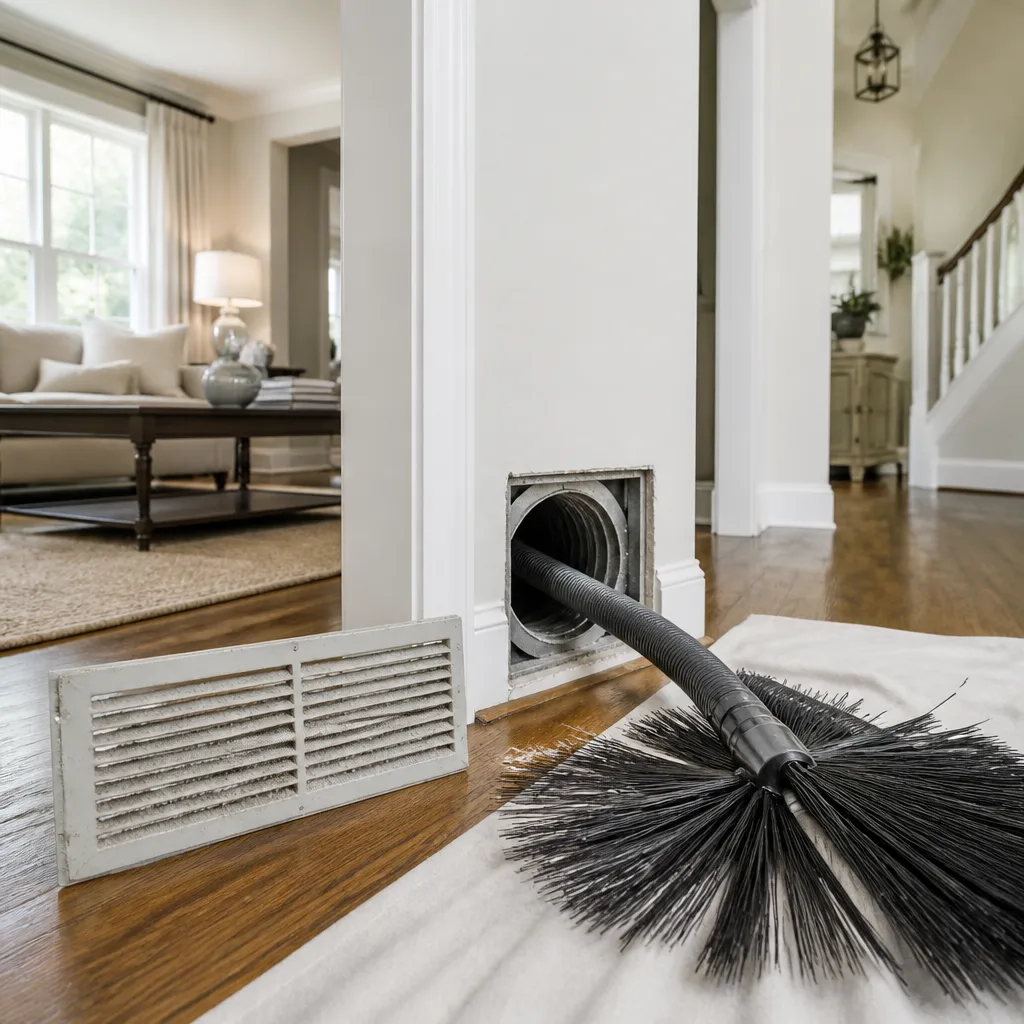 Whole-home duct cleaning
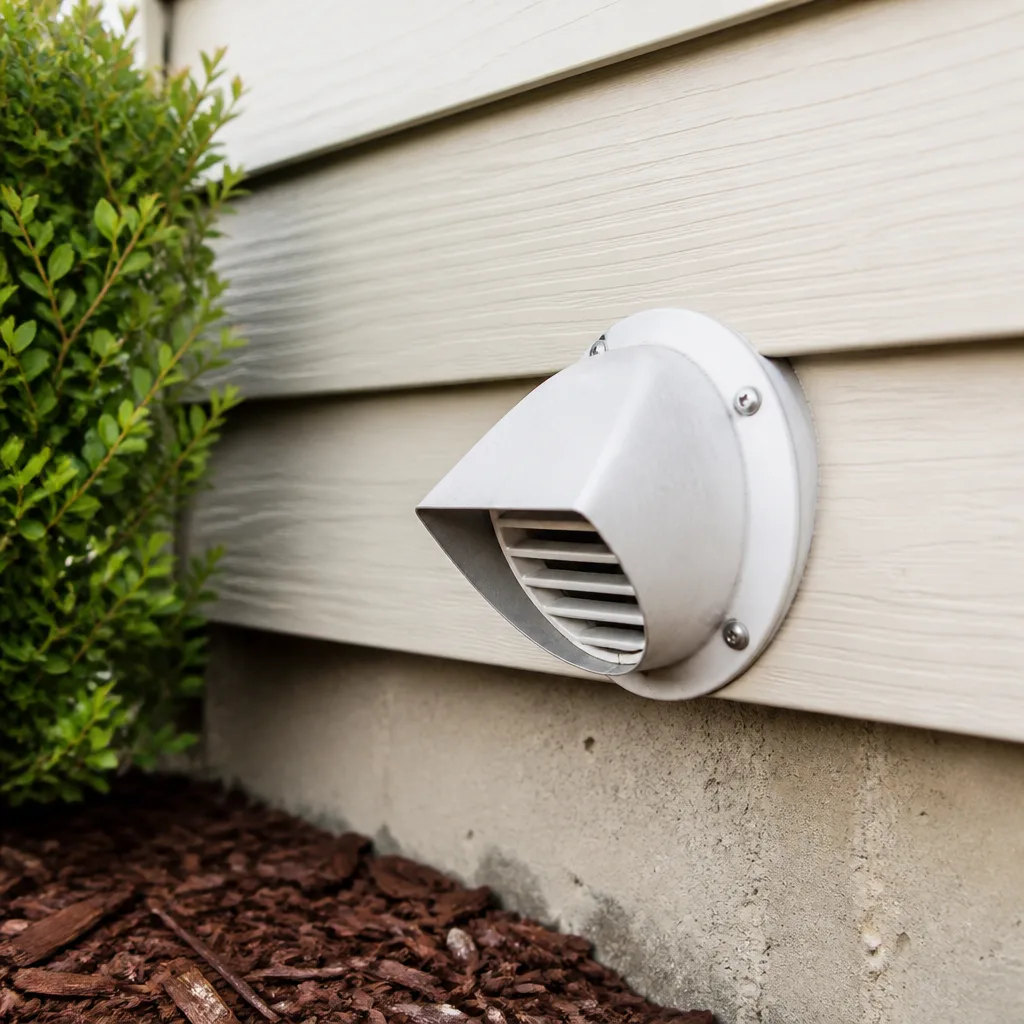 Dryer vent cleaning
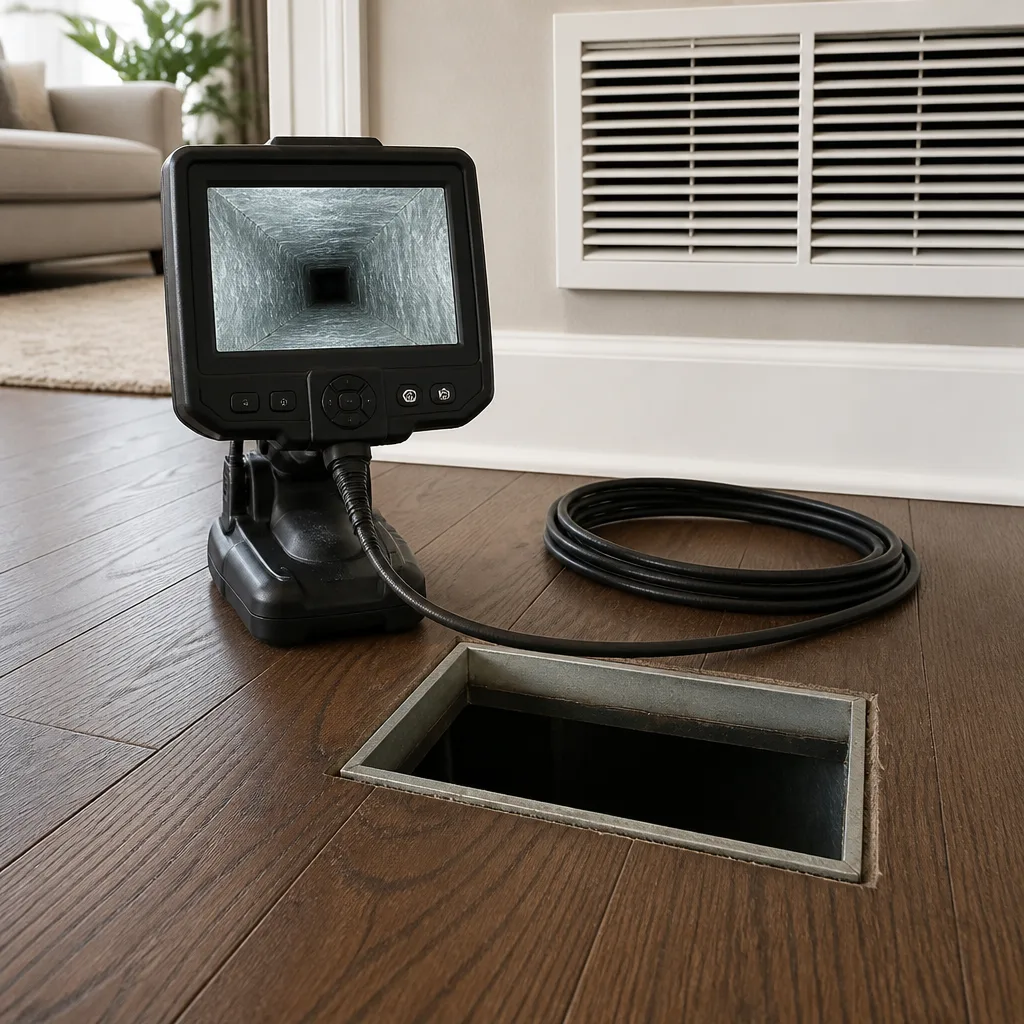 Camera inspection
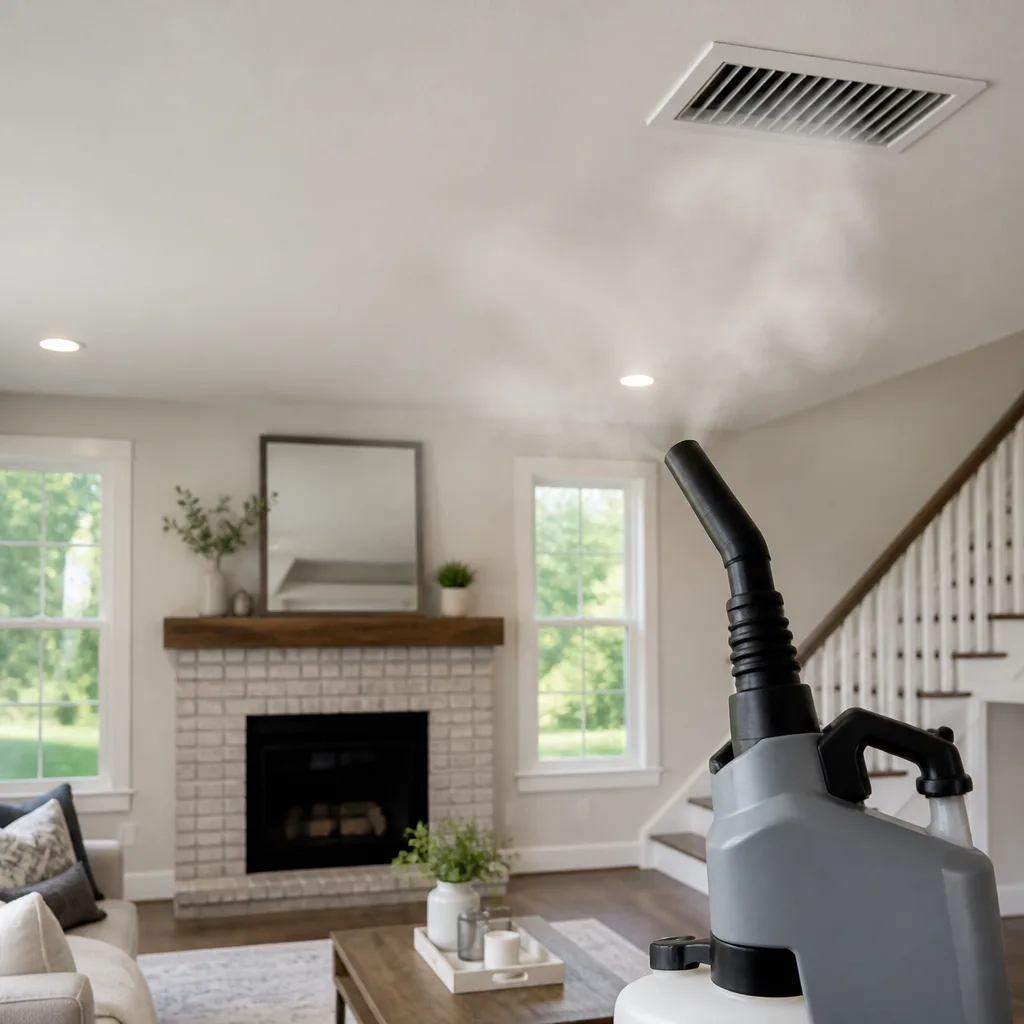 Sanitizing & deodorizing
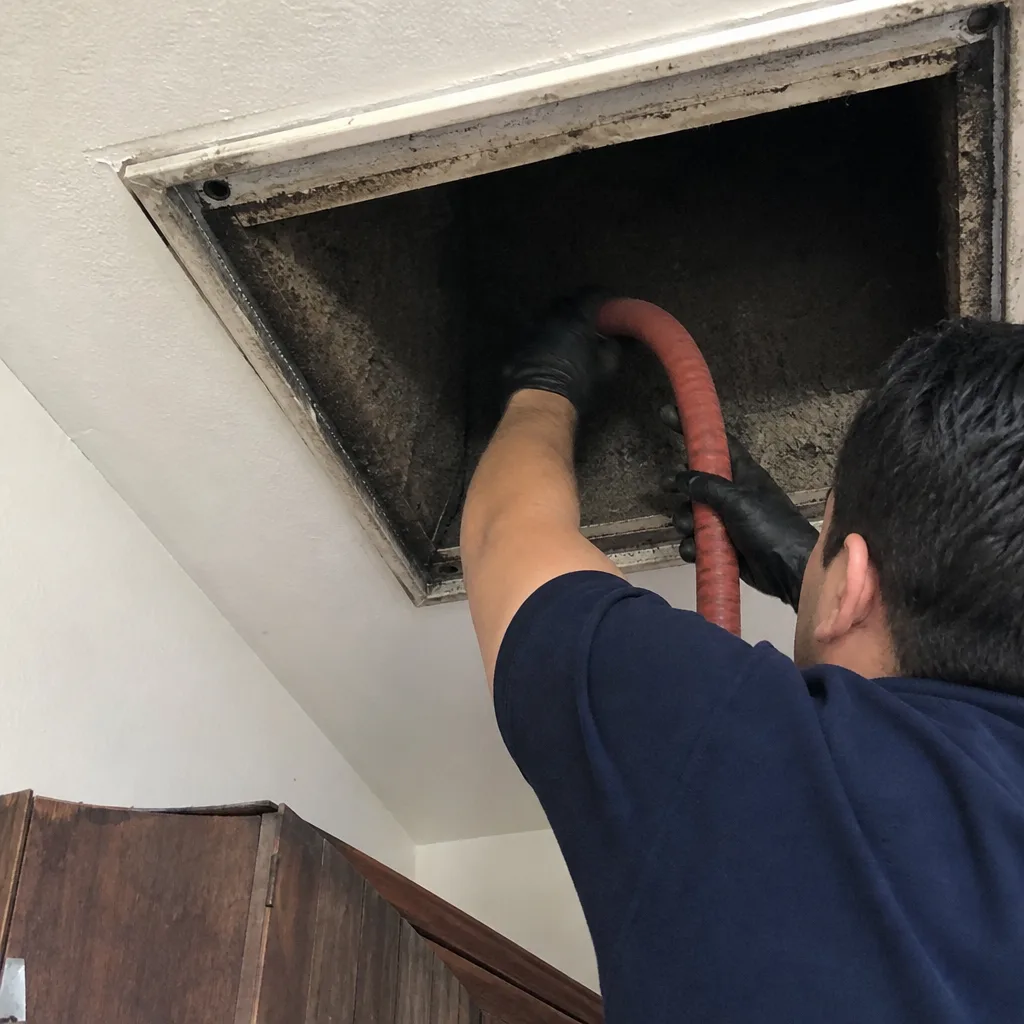
Whole-system duct and dryer vent check with before-and-after photos - you see exactly what came out of your vents
That "$99 whole-house special" is a bait ad - the real number appears once they are in your hallway, or the "clean" is a shop-vac at the register. We photograph the inside of your ducts before and after instead.
Air Duct Cleaning Permits, Codes & Inspections in CA: What You Need to Know
Most homeowners assume that anything involving their HVAC system requires a permit. Then they assume the opposite. The truth sits somewhere in between, and it’s a truth that costs people real money when they get it wrong. Duct cleaning itself is unregulated in California. Duct repair and modification is not. The gap between those two facts is where homeowners get caught with unpermitted work they didn’t know required a permit. We see this all the time in Pacific Beach, where decades-old beachside homes with salt-air corrosion need more than Air Duct Cleaning services, and the transition from “maintenance” to “construction” happens faster than most people realize.
This guide explains exactly where that regulatory line sits under California law, what Title 24 actually covers, how San Diego municipal code treats duct modifications, and what NADCA standards mean when the state doesn’t issue duct cleaning licenses. By the end, you’ll know precisely what questions to ask any contractor so you’re not left holding an invoice for “cleaning” that should have pulled a permit.
Styles & brands we work with
- Whole-home duct cleaning
- Dryer vent cleaning
- Camera inspection
- Sanitizing & deodorizing
Quick Answer
Air duct cleaning does not require a permit anywhere in California, including Pacific Beach and greater San Diego. However, duct repair, sealing that involves material application beyond basic tape, duct replacement, insulation changes, and certain dryer vent modifications can trigger permit requirements under California Title 24 and local municipal codes. The distinction hinges on whether the work is maintenance or modification. Cleaning falls under maintenance. Anything that alters the duct system’s structure, materials, or layout crosses into modification territory, and that’s where permits enter the conversation.
Table of Contents
- Cleaning vs. Modification: Where the Legal Line Sits
- California Title 24 and Duct Systems: What It Actually Covers
- San Diego Municipal Code and Duct Work: Local Requirements
- NADCA ACR Standards: The Professional Benchmark Without State Licensing
- Dryer Vent Cleaning vs. Modification: A Separate Code Path
- How to Confirm Scope of Work So You Don’t Inherit Unpermitted Ductwork
- What Documentation Should a Legitimate Duct Cleaning Job Produce
- Resale Implications of Unpermitted Duct Work in Pacific Beach
- Common Mistakes to Avoid
- When to Call a Professional
- Frequently Asked Questions
- The Bottom Line
Cleaning vs. Modification: Where the Legal Line Sits
California building code draws a bright line between maintenance and modification, but that line gets blurry when a contractor is working inside your ducts. Here’s the distinction in practical terms: cleaning removes contaminants from existing surfaces. Modification changes those surfaces, the materials they’re made of, the way air moves through them, or the system’s footprint. Cleaning is a service. Modification is construction. The permit requirement follows the construction definition, not the service definition.
This matters in Pacific Beach more than in inland communities. Salt air accelerates duct corrosion. Older homes here, especially the beach cottages and 1970s condos that make up a huge portion of Pacific Beach’s housing stock, have galvanized steel ducts that corrode at the seams. A homeowner calls for what they think is routine cleaning, and the technician discovers warning signs like pitted metal, disconnected sections, or compromised flex duct. At that moment, the job has shifted from cleaning to repair, and the homeowner needs to understand that the conversation has shifted from maintenance to potentially permit-required work.
The practical test we’ve learned to apply is simple. If the work restores the system to its original condition using equivalent materials and doesn’t change how the system functions, it’s usually maintenance and exempt from permits. If the work replaces sections with different materials, re-routes airflow, changes insulation values, enlarges or downsizes ducts, or alters the plenum, it’s modification. Under San Diego municipal code, that type of work falls under mechanical alteration and requires a mechanical permit through the City of San Diego’s Building Division.
What Counts as Cleaning (No Permit)
- Source removal of dust, debris, and microbial growth from interior duct surfaces using negative air pressure and agitation tools
- Brushing and vacuuming of register covers, boots, and accessible duct interiors
- Application of EPA-registered sanitizers or antimicrobial treatments that don’t alter duct material or airflow
- Inspection with cameras or borescopes that doesn’t require cutting access holes beyond existing register openings
- Basic filter replacement and rack cleaning
What Counts as Modification (Permit May Be Required)
- Replacing corroded duct sections with new material, even if the replacement is the same size
- Applying mastic sealant in quantities that change airflow characteristics, or closing off entire branch runs
- Re-insulating ducts, adding external wrap, or changing the R-value of existing insulation
- Relocating supply or return registers
- Adding a new branch to serve a room addition or newly finished space
- Replacing flex duct with rigid duct or vice versa
The takeaway: if a contractor tells you they can do everything under one invoice labeled “cleaning,” ask them to itemize what they’ll actually do. If the itemized list includes any of the modification items above, a permit is likely required under California law, regardless of what the invoice says.
California Title 24 and Duct Systems: What It Actually Covers
California Title 24, the state’s Building Energy Efficiency Standards, is probably the most misunderstood document in the duct work conversation. Homeowners hear “Title 24” and assume anything touching their HVAC requires compliance, testing, and certification. That’s not accurate. Title 24 governs energy efficiency requirements for new construction, additions, and alterations that affect a home’s energy use. Routine duct cleaning doesn’t affect energy use in the regulatory sense, so it falls entirely outside Title 24’s scope.
But here’s the part most Pacific Beach homeowners don’t know. When duct work is modified, Title 24 applies directly, and it imposes measurable requirements. Specifically, when ducts are installed, replaced, or sealed as part of an alteration, the work must include HERS (Home Energy Rating System) verification through a certified HERS rater. This involves a duct leakage test that measures how much conditioned air escapes the system. The standard is specific: newly installed or replaced ducts in climate zone 7, which includes Pacific Beach and all of coastal San Diego, must demonstrate leakage of no more than 12% of total airflow for most residential applications.
That requirement alone is enough to change how a homeowner should think about a “simple” duct repair. If a contractor replaces 20 linear feet of rusted duct in your Pacific Beach home without pulling a mechanical permit and without arranging a HERS test, the work is non-compliant. It won’t show up in a casual real estate inspection, but it will surface if a buyer requests a permit history at the City of San Diego Building Division, which is increasingly common in this market.
Title 24 Requirements That Follow Duct Modification
- Mechanical permit from the local building authority (City of San Diego for Pacific Beach)
- HERS duct leakage test by a certified rater
- Compliance with required insulation values (R-6 for ducts in unconditioned space, R-8 for ducts in high-temperature attics)
- Sealing verification to limit leakage to the prescribed percentage
- Documentation filed with the building department for future inspection
If a cleaning-only job stays within the boundaries of source removal and surface treatment, none of this applies. The moment material replacement enters the scope, the Title 24 framework activates. The line is clean conceptually, but it requires the contractor to be honest about what they’re actually doing. That’s a bigger “if” than most homeowners realize.
San Diego Municipal Code and Duct Work: Local Requirements
The City of San Diego adopts the California building codes with local amendments, and those amendments matter for duct work. Under the current adoption cycle, San Diego follows the California Mechanical Code as the baseline, which incorporates the Uniform Mechanical Code. Within that framework, duct installation, replacement, and significant alteration are classified as mechanical work subject to permit.
For Pacific Beach specifically, there are practical local considerations that don’t show up in the code text but absolutely show up in the field. The mix of housing stock here spans pre-war beach bungalows, mid-century duplexes, 1970s condo conversions, and a growing stock of recent gut renovations and ADUs. Each type presents different compliance realities. A 1960s duplex with original galvanized ducting, converted from a single-family, often has non-compliant duct configurations that were never permitted in the first place. When that duct work begins leaking or fails, the repair conversation starts in a deficit position: the system wasn’t compliant when it was installed, and bringing it into compliance during repair triggers a broader permit requirement than a clean repair on a compliant system would.
San Diego’s building officials also enforce a separate rule that often surprises homeowners: the “like-for-like” exemption. Under this exemption, replacing a failed component with an equivalent component does not require a permit, provided the replacement does not alter the system’s capacity, configuration, or energy performance. So replacing a rusted register cover with a new register cover of the same dimensions? No permit. Replacing a length of rusted duct with a new length of the same material and diameter? This sits in a gray zone that different inspectors interpret differently. Some consider “equivalent material, equivalent size” as maintenance. Others consider any cutting and replacement of duct sections as modification. The conservative approach is to call the Building Division and ask, but for a Pacific Beach homeowner, the practical advice is to assume that any duct replacement beyond a register cover is permit-triggering work until a building official says otherwise.
NADCA ACR Standards: The Professional Benchmark Without State Licensing
Here’s a reality that surprises most California homeowners: the state does not license air duct cleaners. There’s no “California State License Board” category for duct cleaning contractors specifically. A company can operate as a handyman, a cleaning service, or an HVAC contractor, and all three can legally offer duct cleaning without any duct-specific credential. This is the regulatory void that makes due diligence on the homeowner’s part absolutely essential.
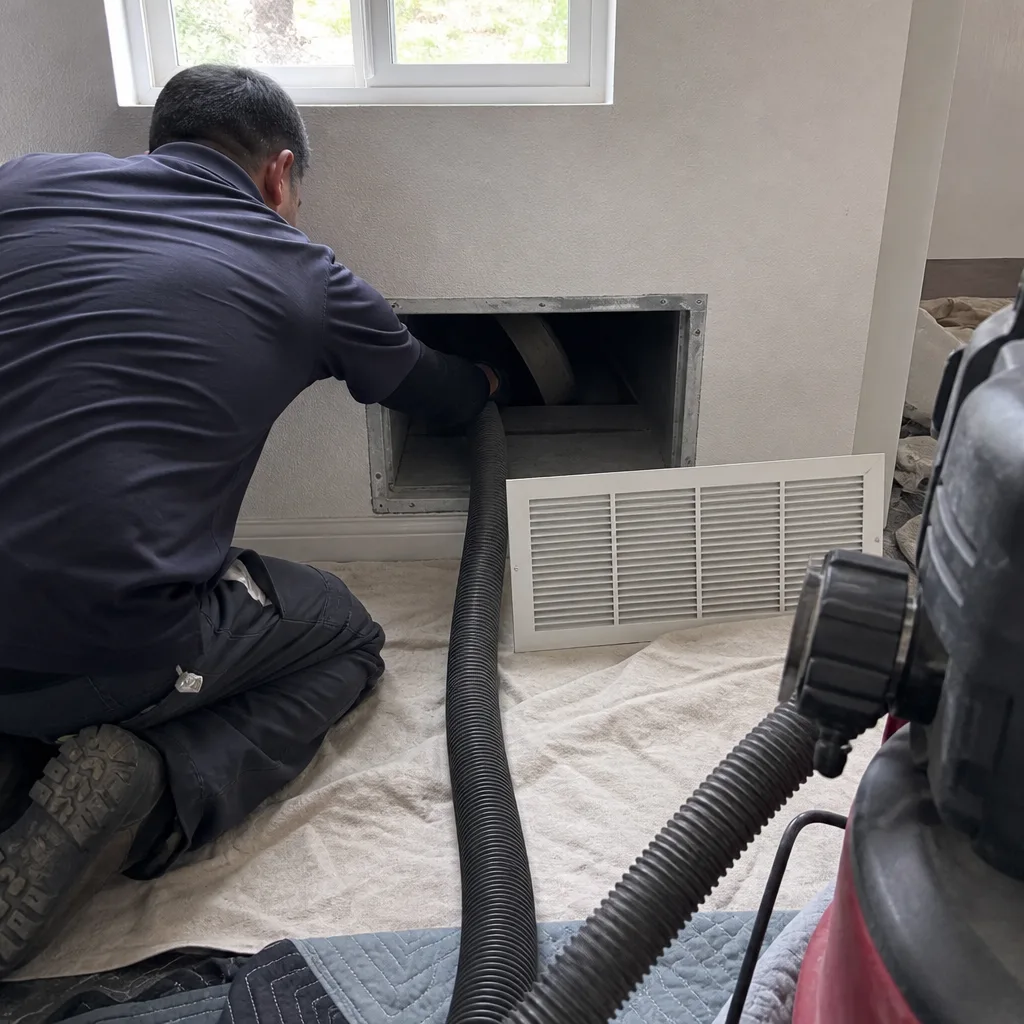
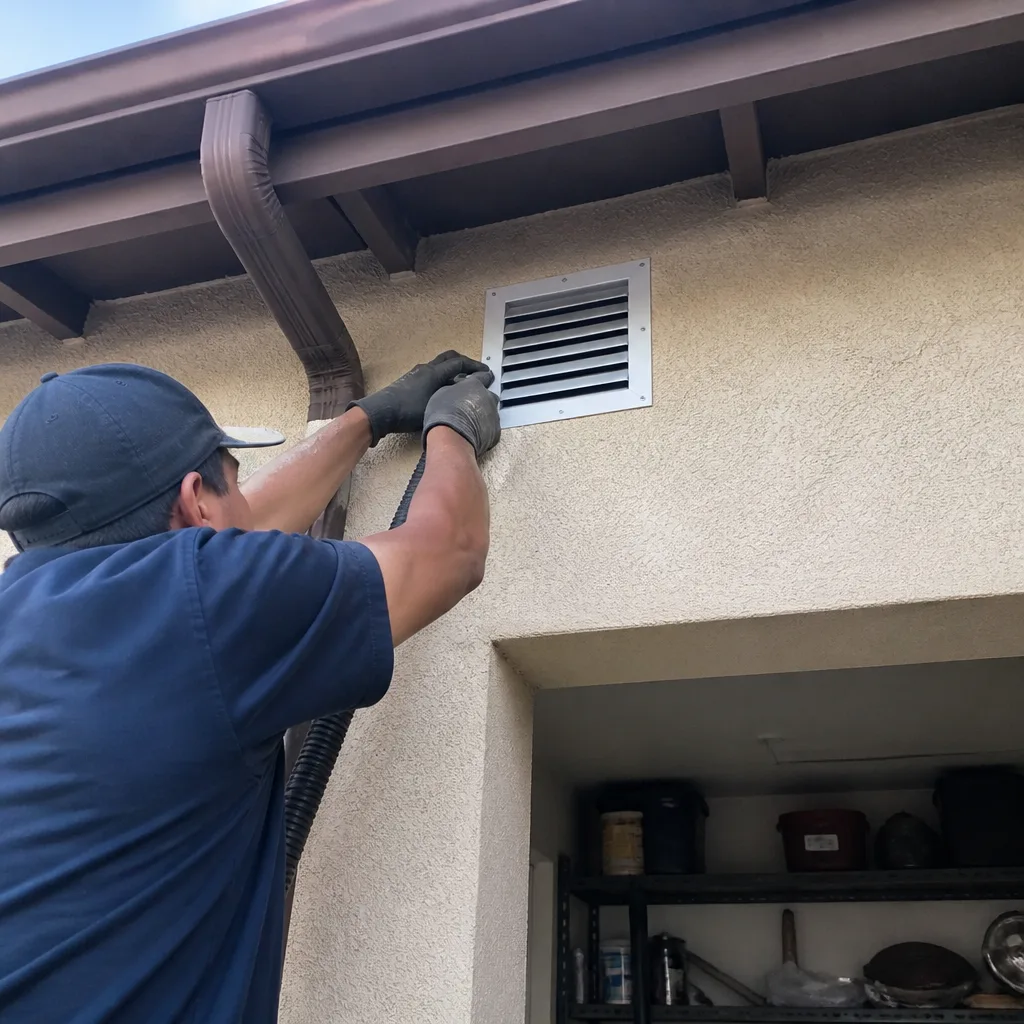
NADCA, the National Air Duct Cleaners Association, exists to fill that void; see our troubleshooting guide for related issues. Its ACR Standard (Assessment, Cleaning, and Restoration) is the professional benchmark that responsible companies voluntarily follow. The standard specifies equipment requirements, including the use of negative air machines capable of achieving the proper airflow through the duct system, agitation devices that can dislodge debris without damaging duct walls, and HEPA filtration on the collection side to prevent re-contamination of the living space.
What does this mean for a Pacific Beach homeowner evaluating a duct cleaning proposal? It means the standard exists as a voluntary code of conduct, and companies that follow it will say so explicitly, will name their equipment, and will explain their process. Companies that don’t follow it won’t mention it at all, which is information in itself. At Fairway Air Duct Cleaning home, our team runs Rotobrush and Nikro equipment, which are the systems NADCA references in its certification curriculum, because the standard doesn’t just specify outcomes. It specifies the tools capable of producing those outcomes.
What NADCA ACR Standards Require (Compared to a Basic Shop-Vac Approach)
- Source removal: dislodging debris from duct walls, not simply vacuuming the visible surface
- Negative air containment: placing the duct system under negative pressure during cleaning so debris cannot escape into the living space
- HEPA filtration on the collection side: preventing the machine from exhausting fine particles back into the home
- Assessment before cleaning and verification after: photographic or video documentation of before and after conditions
- Access restrictions: creating access only where necessary, sealing access points after completion
- Chemical application standards: only EPA-registered products, applied according to label directions, with occupant notification
The standard matters because it’s the closest thing California has to a regulatory floor. When a company follows it, the homeowner has a defensible standard to compare against. When a company doesn’t, the homeowner is essentially trusting an unverified process on the most important air pathway in their home.
Dryer Vent Cleaning vs. Modification: A Separate Code Path
Dryer vent work in California operates under its own set of rules, and the distinction between cleaning and modification is even sharper here than in HVAC ducts. The California Mechanical Code regulates dryer exhaust systems as a standalone category, with specific requirements for materials, termination, length, and installation methods. Unlike HVAC ducts, which can theoretically be cleaned indefinitely without triggering code review, dryer vent systems have hard limitations that often require modification to meet code.
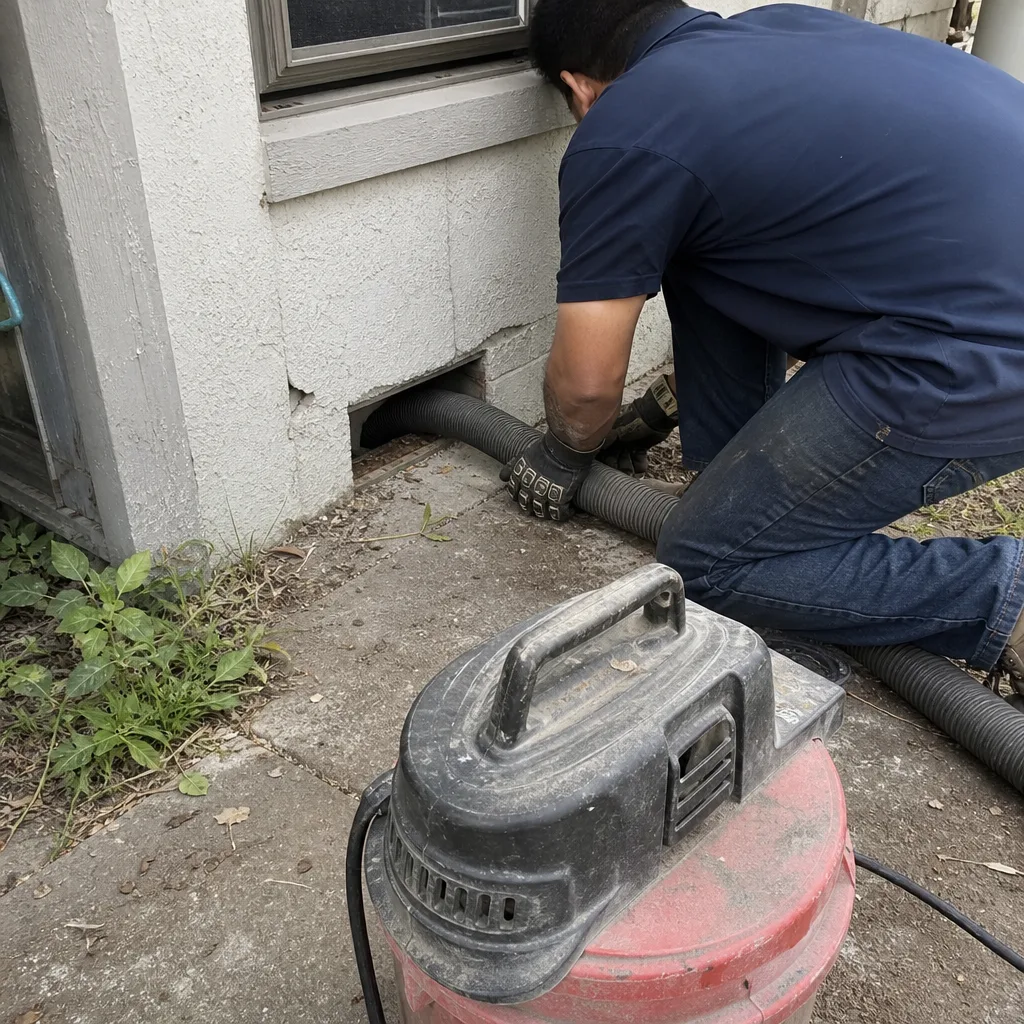
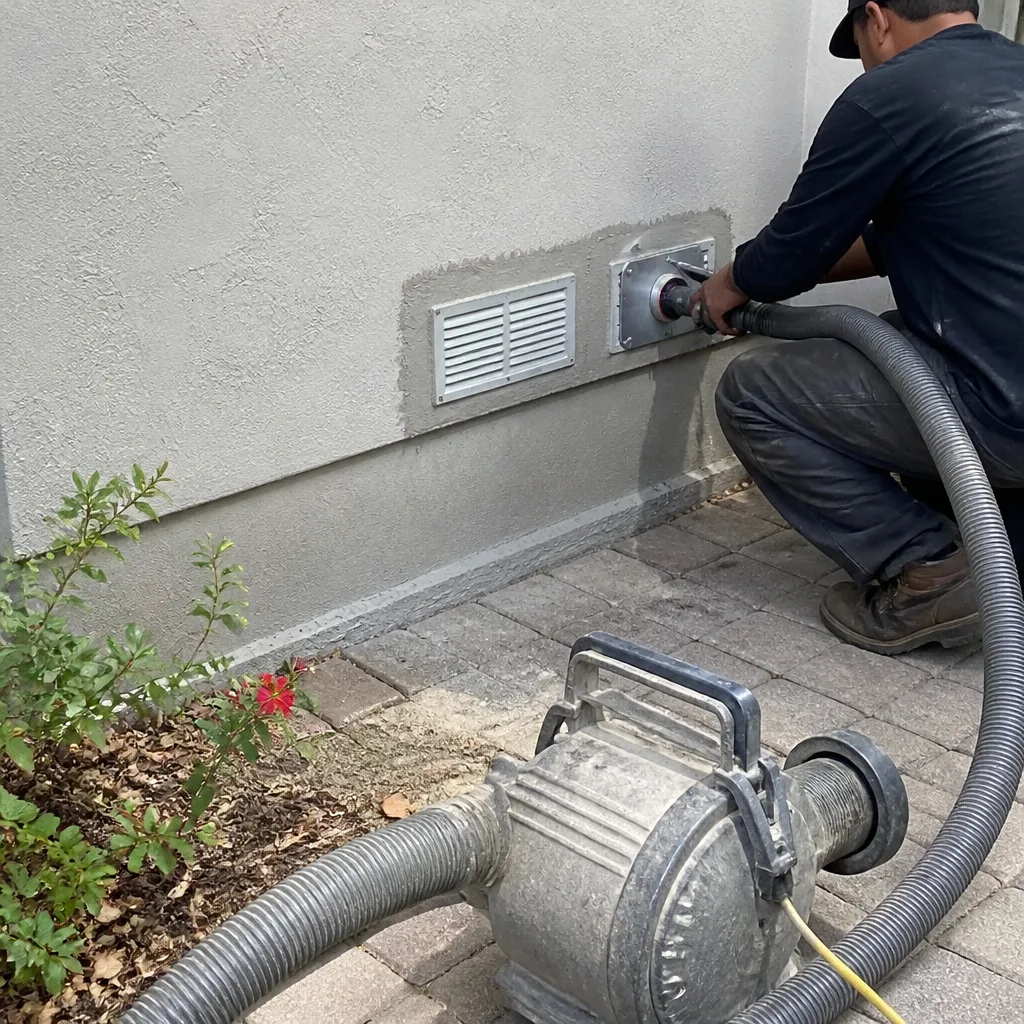
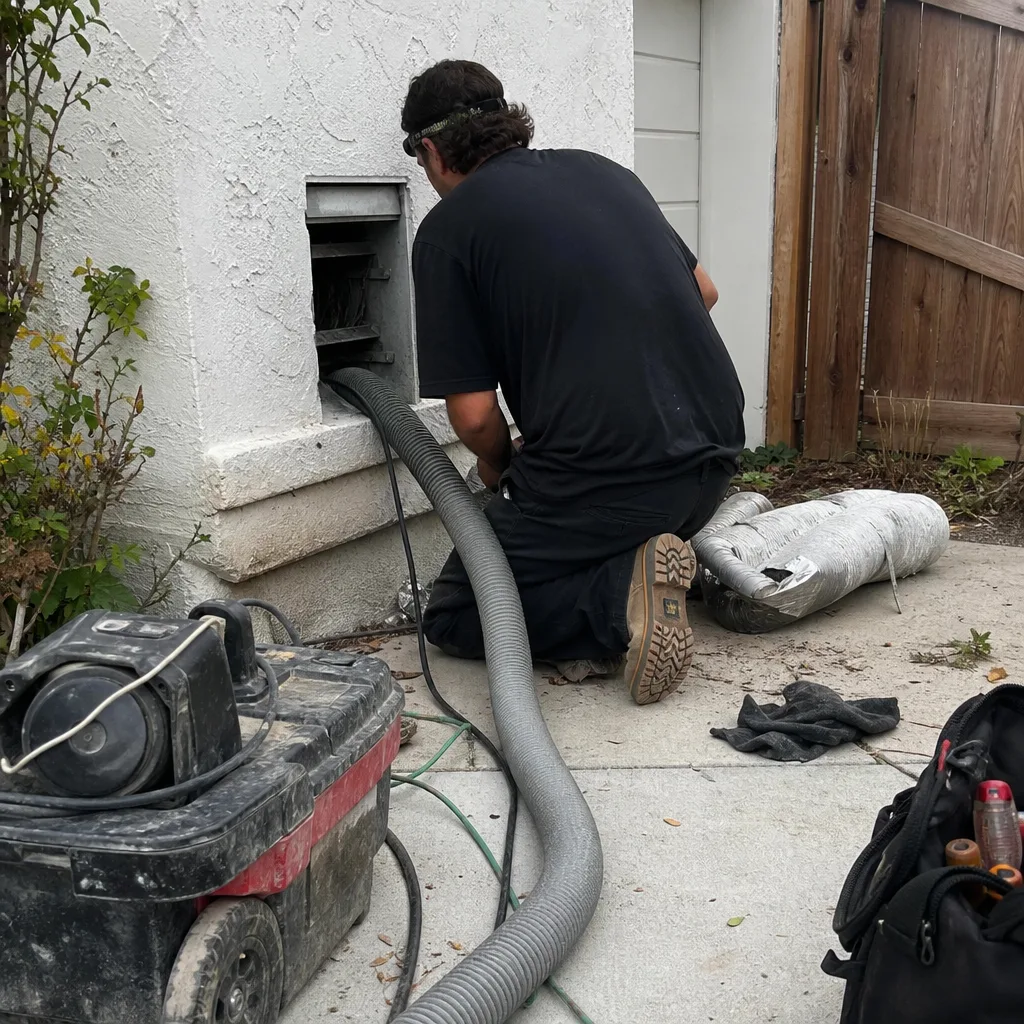
The most common scenario in Pacific Beach goes like this: a homeowner has a dryer vent that’s 30 feet long, bends around three corners, and terminates under a deck. That system was probably installed when the home was built, before current code limitations on equivalent length. Dryer Vent Cleaning in Pacific Beach is a maintenance service: we remove accumulated lint, which in some Pacific Beach homes with long runs and multiple bends happens fast enough that annual cleaning is genuinely necessary, not just a recommendation. But if the vent exceeds current code limits on equivalent length or if the termination is improperly located, cleaning alone won’t solve the safety issue. The fix requires reconfiguration, which is modification, which can require a permit.
The fire statistics make this conversation urgent. Lint accumulation in dryer vents is a documented leading cause of household fires, and the risk compounds with vent length. A short, straight vent a homeowner might clean themselves. A long, multi-bend vent that travels through old Pacific Beach construction needs professional equipment and, potentially, professional reconfiguration. The permit conversation, if it reaches that point, belongs to the building department. The cleaning conversation belongs to a specialist.
Our equipment choices on the dryer vent side reflect the same discipline we apply to HVAC work. Nikro’s brush-and-vacuum systems are built specifically for dryer vent runs, with rotating brushes sized to the pipe diameter and vacuum capacity matched to the run length. This isn’t consumer-grade equipment, and it matters because a consumer-grade solution on a long Pacific Beach run will leave lint behind. That residual lint is the exact material that ignites.
How to Confirm Scope of Work So You Don’t Inherit Unpermitted Ductwork
This is the section that saves Pacific Beach homeowners money. Most people don’t intentionally hire an unpermitted contractor. They hire a contractor who describes the work as “cleaning” and then performs work that crosses into modification territory without ever changing the paperwork. The invoice says “cleaning,” the work includes duct replacement, and five years later the homeowner discovers unpermitted work during a sale transaction. The contractor is long gone. The homeowner is holding the problem.
Preventing this requires asking the right questions before the work starts, not after the invoice arrives. Here’s the exact sequence we recommend.
- Ask whether the work will include any material replacement. If the answer is yes, or if the contractor hedges by saying “we’ll see once we get in there,” ask the follow-up: will any replacement work be pulled under a mechanical permit? A contractor who follows code will answer yes. A contractor who says “you don’t need a permit for that” is giving you information you should hear clearly.
- Ask whether the company follows NADCA ACR standards. If the answer is no, or if the contractor doesn’t know what NADCA is, cross the company off the list. This is not a trivial preference. It’s the only meaningful credential in an unlicensed industry.
- Request an itemized scope of work in writing before the job starts. The scope should distinguish between cleaning activities and any repair or replacement activities. If the document word “cleaning” appears only, and the contractor verbally mentions “fixing” or “replacing” anything, request a revised scope that separates the two categories.
- Ask what happens if modification is discovered mid-job. The answer should be: the work stops, the homeowner is notified, and scope is renegotiated with permit consideration. A contractor who says “we’ll just handle it” is telling you that they’ll make unilateral decisions about permit-required work without your input.
- Verify the contractor’s contractor license classification. Companies performing duct modification under a permit must hold the appropriate CSLB license classification, typically C-20 (warm-air heating, ventilating, and air conditioning). Cleaning-only work falls under a service classification. If a company is doing modification-level work under a handyman registration, the work is unpermitted by definition.
These questions take five minutes. They are the difference between a clean, documented maintenance history and an unpermitted liability that surfaces at the worst possible moment, which in Pacific Beach is usually during escrow.
What Documentation Should a Legitimate Duct Cleaning Job Produce
After the work is done, the documentation tells you what kind of company you hired. A legitimate, NADCA-compliant duct cleaning job produces before-and-after photographic evidence. Not a summary report that says “cleaning completed.” Actual images of your duct interiors, captured with a camera system, showing the condition before and the condition after. This is standard practice under NADCA’s verification requirements, and it’s the only way a homeowner can independently confirm the work happened beyond taking a contractor’s word for it.
For Air Duct Cleaning in Pacific Beach, the photographic evidence matters for another reason specific to this housing market. Homes here change hands regularly, and buyers in Pacific Beach are more likely than buyers in newer inland developments to request maintenance documentation for major systems. If a seller can produce before-and-after photos from a duct cleaning performed by a company that names its equipment and follows a professional standard, that documentation reads as credible. If the seller has a handwritten invoice that says “ducts cleaned,” the inspection conversation shifts to proving the work actually happened, which is harder.
The documentation standard extends to permits where permits were required. If any portion of the work involved modification, the permit and the final inspection sign-off from the Building Division are part of the documentation package. A company that tells you the permit “isn’t necessary” but performs modification work is denying you the very documents you need to prove compliance. In this market, where Pacific Beach buyers routinely run permit histories before closing, missing permits are discoverable. They always surface.
Resale Implications of Unpermitted Duct Work in Pacific Beach
Pacific Beach real estate moves fast, but due diligence here is more rigorous than it was ten years ago. Buyers are educated, inspectors are thorough, and permit history searches through the City of San Diego’s online portal are a standard part of modern purchase transactions. Unpermitted duct modification doesn’t hide the way it did in previous decades.
The most common sequence goes like this. A seller replaced duct sections during what they believed was a cleaning appointment three years ago. No permit was pulled. During escrow, the buyer’s inspection reveals newer duct sections that don’t appear in the permit record. The buyer’s agent requests documentation. The seller has none. The transaction stalls, the seller either pays for a retroactive permit (which involves opening the walls to verify the work, paying double fees, and often hiring a HERS rater), or negotiates a concession. Either way, the seller’s savings from avoiding a permit three years earlier evaporate, plus time and complexity.
The reverse scenario also happens. A seller has a documented, permitted duct repair with HERS verification and final sign-off. That documentation shortens the inspection period, answers buyer questions before they become objections, and positions the seller as someone who maintained the property properly. The cost difference between permitted and unpermitted work is real, and it’s not zero. But in Pacific Beach’s real estate market, that cost difference is almost always recovered at resale, with interest.
Our Air Duct Repair in Pacific Beach service operates with this resale reality in mind. When we identify repair-level work, we scope it with permit implications stated upfront. We don’t bury modification work under cleaning invoices because the short-term convenience isn’t worth the long-term liability we know our neighbors here will face at resale.
Common Mistakes to Avoid
- Accepting “cleaning” as the invoice label when modification occurred. If sections were replaced, resealed with mastic, or re-insulated, the invoice should reflect repair or modification, not cleaning. The label matters for your documentation file and for any future permit questions.
- Assuming that because no license is required for cleaning, no standard applies. NADCA ACR standards exist precisely because the state doesn’t license this trade. Companies that follow them will tell you. Companies that don’t, won’t mention it.
- Treating all duct cleaning equipment as equivalent. A Rotobrush or Nikro system operates on different principles than a hardware-store vacuum attachment. The former achieves negative air containment and source removal. The latter recirculates some of what it collects. The difference is measurable in the air you breathe after the job.
- Failing to ask what happens if modification is discovered mid-job. Contractors have different protocols for this. Some stop work and consult the homeowner. Others proceed and bill later. The second approach is how unpermitted work happens without the homeowner ever making a decision.
- Skipping dryer vent inspection until the dryer stops working. By the time performance degrades noticeably, lint buildup is already at a level that doubles the cleaning time and significantly increases fire risk. Annual service is the correct interval for most Pacific Beach homes, especially those with long or multi-bend runs.
- Believing that permits only matter when you’re selling. Unpermitted duct modifications also affect insurance claims. If a fire or water damage event traces back to modified duct work that was never inspected, the insurer’s investigation may conclude the work was non-compliant, complicating the claim.
When to Call a Professional
Duct cleaning is not a DIY project, and the reasons are specific rather than generic. Source removal requires negative air pressure to prevent contamination spread. Without it, brushing ducts in place redistributes fine particulate into the living space. Camera verification requires equipment that can navigate inside the duct system. Modifications require permit navigation, HERS testing coordination, and licensed contracting. None of these are weekend projects.
If you’re in Pacific Beach and you suspect your ducts need attention, whether from visible dust at registers, inconsistent room temperatures, a recent renovation that left construction debris in the system, or a dryer vent that hasn’t been serviced in years, the correct first step is an assessment. Fairway Air Duct Cleaning offers free estimates in Pacific Beach, and the assessment includes camera inspection so you can see the condition for yourself. Call (866) 241-3526 to schedule. We’ll tell you honestly whether you need cleaning, repair, or nothing at all, and we’ll be specific about which category applies and what, if any, permit requirements follow.
Frequently Asked Questions
No. Air duct cleaning is a maintenance service and does not require a permit anywhere in California, including Pacific Beach. The permit conversation begins only when the work involves replacement, modification, or reconfiguration of duct sections, which is repair work, not cleaning work.
Look at the scope of work in writing. If any materials were replaced, if duct sections were cut out and replaced, if registers were relocated, or if the system was re-insulated or sealed with mastic in quantities that change airflow, the job crossed into repair or modification. Under San Diego’s mechanical code, that type of work may trigger a permit requirement.
No. California does not issue a specific duct cleaning license. This is why NADCA ACR certification and compliance function as the de facto professional standard. Reputable companies will name their equipment, follow NADCA protocols, and provide before-and-after photographic verification.
A HERS test measures duct leakage using calibrated equipment, and Title 24 requires it for new or replaced duct systems in California. If your Pacific Beach home has ducts replaced or modified, the mechanical permit process includes a HERS duct leakage test to verify the system doesn’t leak beyond the prescribed percentage.
For most Pacific Beach homes, annual cleaning is the correct interval. Ocean air, older construction, long vent runs, and frequent beach-lifestyle laundry loads all contribute to faster lint accumulation here than in inland communities. Homes with runs exceeding code-recommended equivalent lengths may need service more frequently.
Yes, in most cases it will. Buyers in Pacific Beach routinely request permit history from the City of San Diego, and home inspectors can identify newer duct sections that don’t match the permit record. Unpermitted duct work creates transaction friction, and retroactive permits are more expensive and complicated than doing the work with permits in the first place.
The Bottom Line
Duct cleaning in California requires no permit, no license, and no state inspection. Browse our more guides & resources to stay informed. That regulatory vacuum is precisely why homeowners need to understand what professional standards look like and where the line sits between maintenance and modification. Cleaning is maintenance. Repair and replacement are modification, and modification pulls the permit conversation into the picture under Title 24 and San Diego municipal code. In Pacific Beach, where older housing stock and salt-air corrosion make repair-level work common, knowing that line protects you from unpermitted work, protects your resale value, and ensures the air in your home is clean because it was cleaned correctly. When in doubt, get the scope of work in writing and ask the question directly: does any of this require a permit?
Written by the team at Fairway Air Duct Cleaning, serving Pacific Beach since 2014.
See the difference
 Before
 After
 Before
 After
 Before
 After