
Last updated November 2, 2026
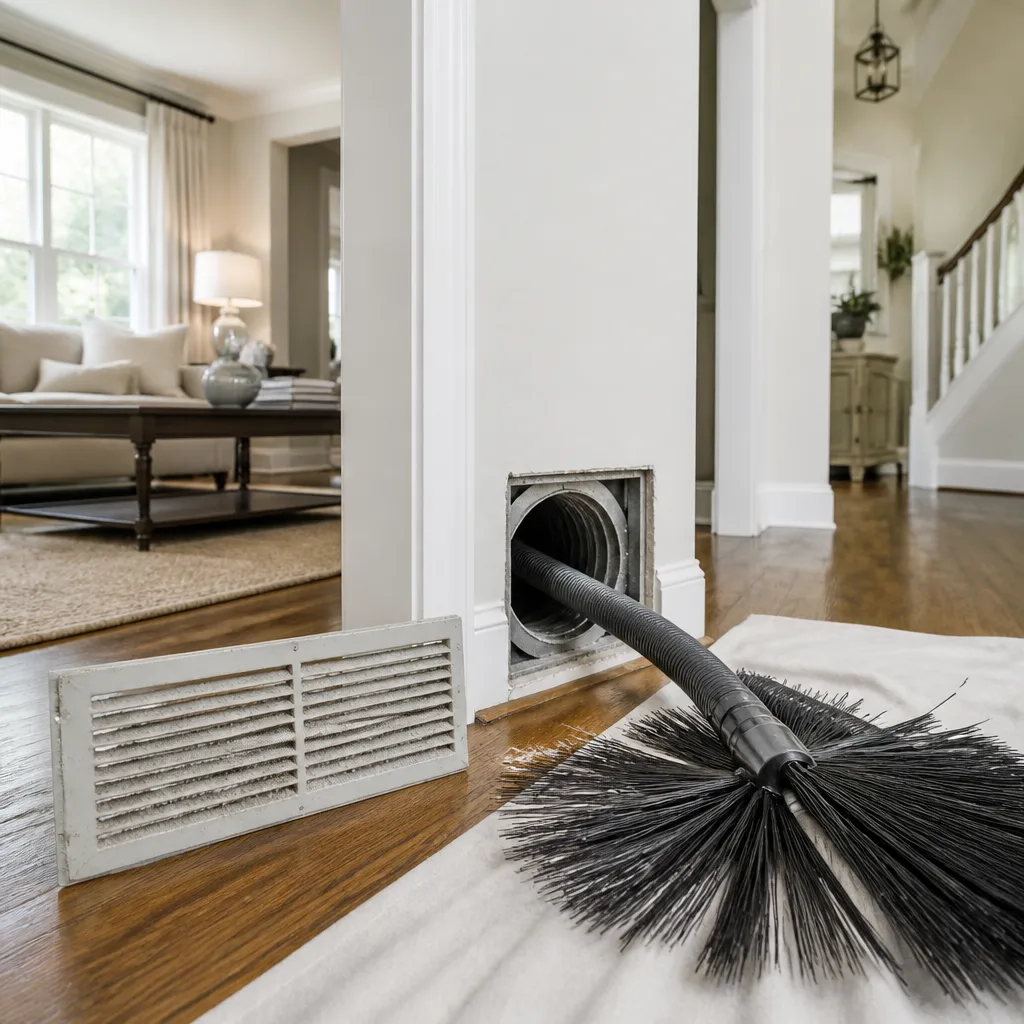 Whole-home duct cleaning
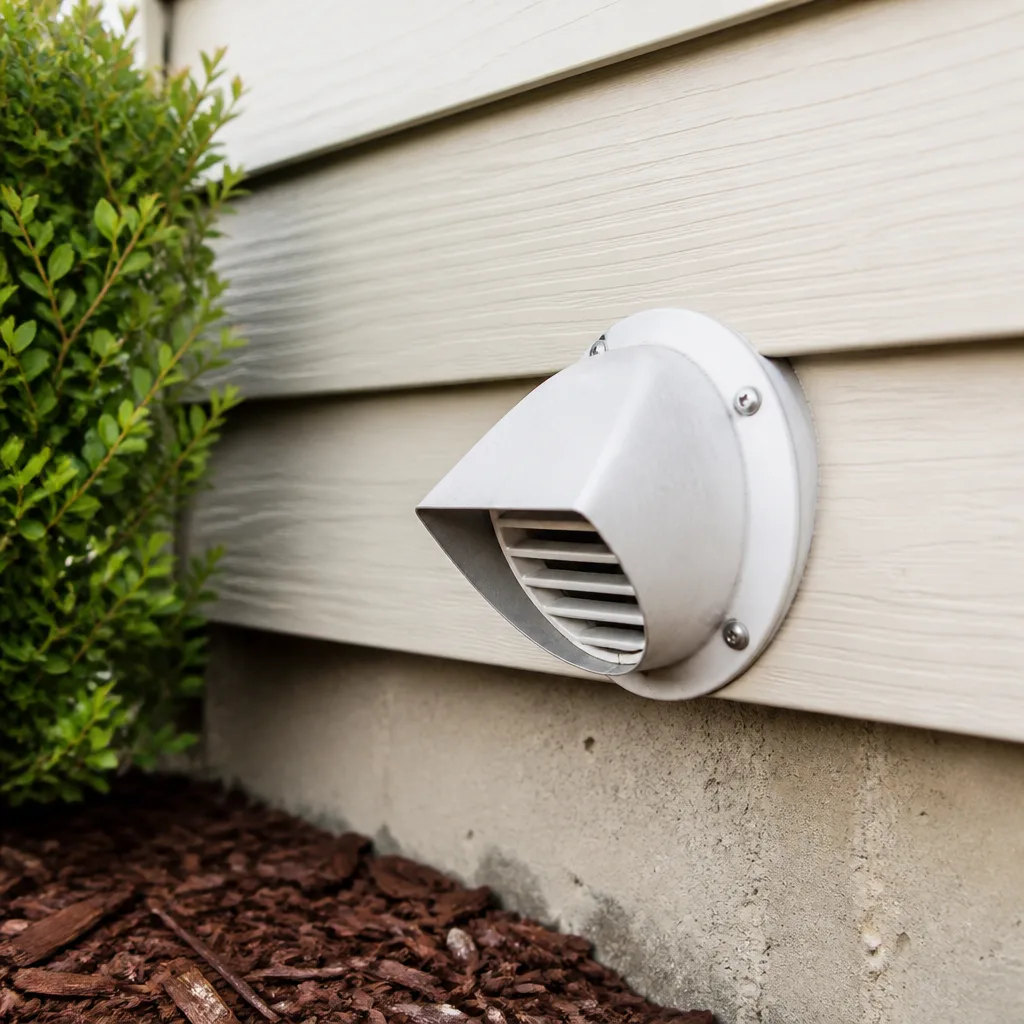 Dryer vent cleaning
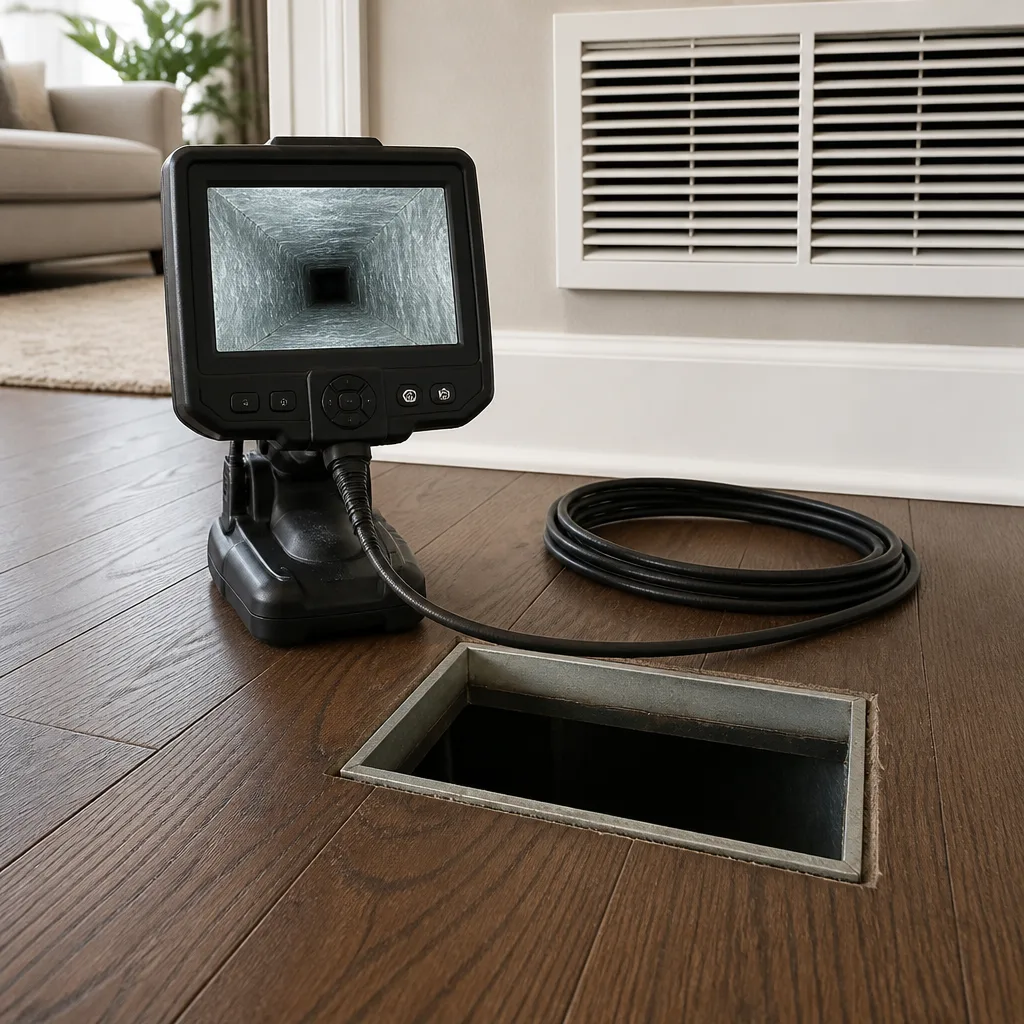 Camera inspection
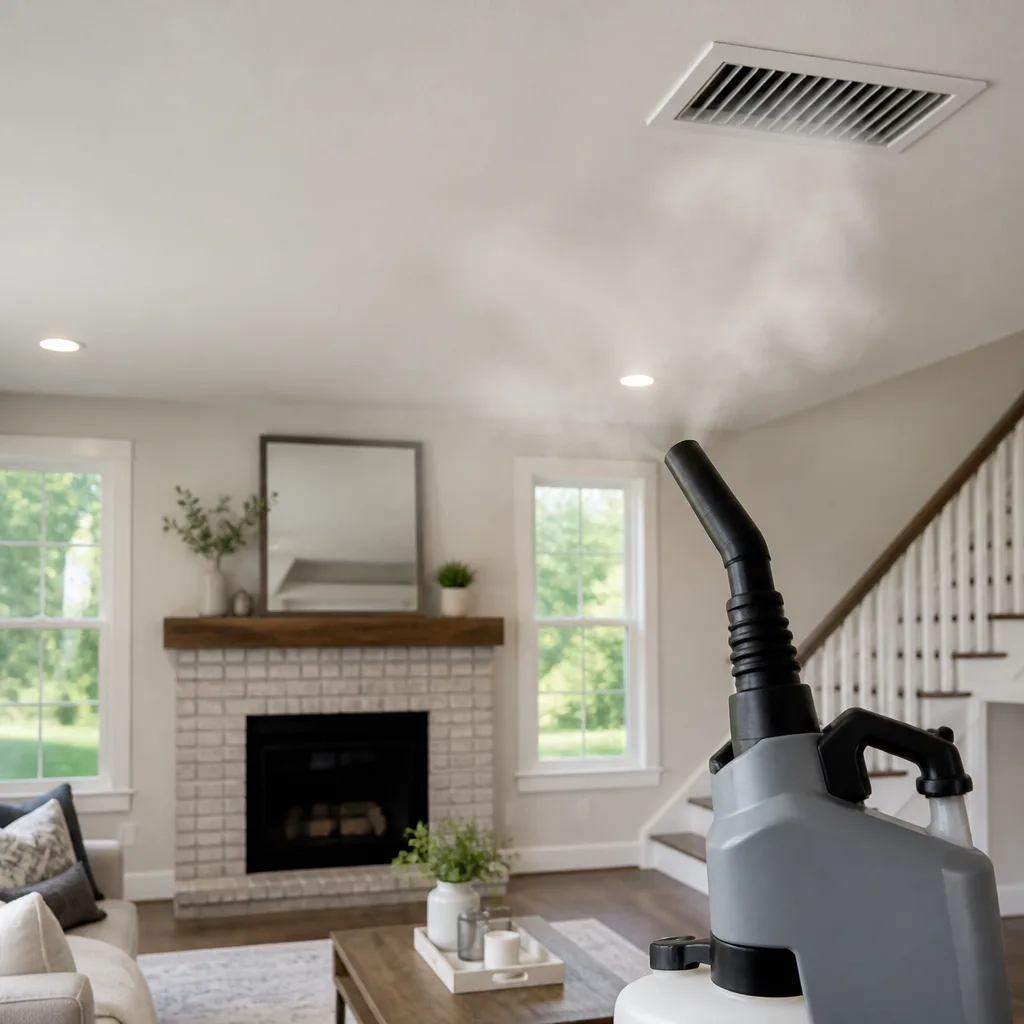 Sanitizing & deodorizing
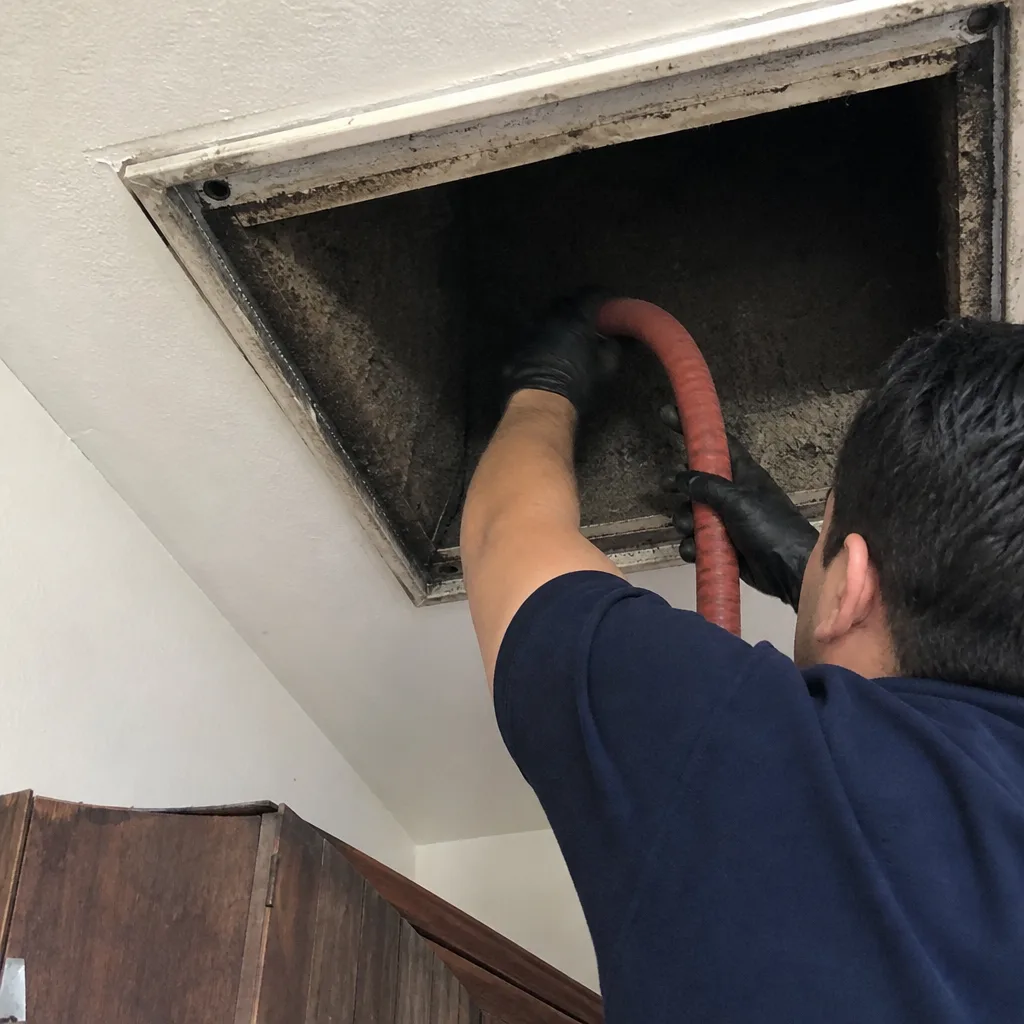
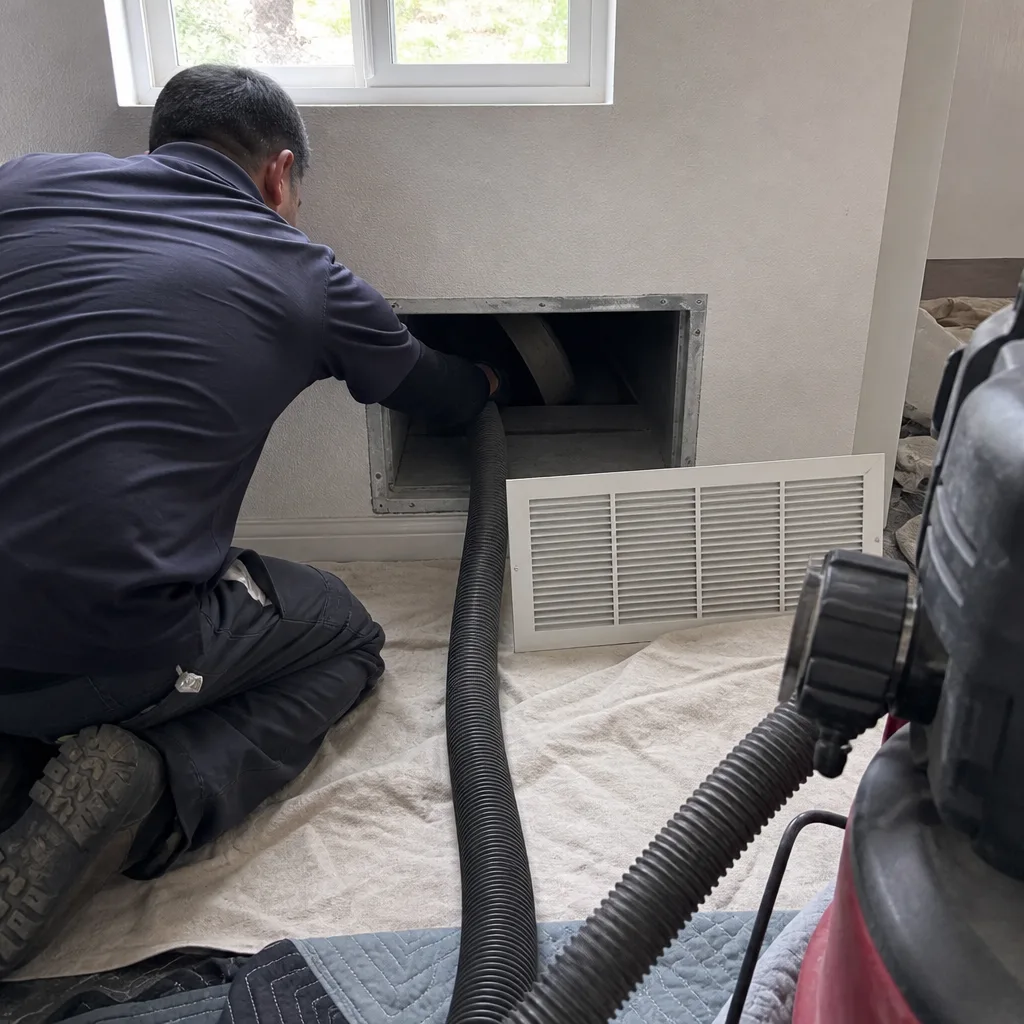
Whole-system duct and dryer vent check with before-and-after photos - you see exactly what came out of your vents
That "$99 whole-house special" is a bait ad - the real number appears once they are in your hallway, or the "clean" is a shop-vac at the register. We photograph the inside of your ducts before and after instead.
Choosing the Right Air Duct Cleaning Brand: A Buyer’s Guide for Pacific Beach
Here’s something most Pacific Beach homeowners don’t realize until they’ve already hired someone: when you book an air duct cleaning, you’re not really hiring a company. You’re hiring their equipment. The name on the truck, the logo on the invoice, the friendly person who answers the phone – none of that matters as much as whether the machine rolling up to your home can actually pull measurable negative pressure across the full length of your duct system. In Pacific Beach, where salt air and coastal humidity create a specific kind of dust-and-debris cocktail inside ductwork, this distinction matters more than in inland neighborhoods.
This guide is built around a simple premise: the most useful “brand” in air duct cleaning isn’t the service company’s brand. It’s the equipment brand. By the time you finish reading, you’ll know exactly which machines set the industry benchmark, why model numbers matter more than company names, and how to ask contractors in Pacific Beach the questions that separate specialists from generalists running hardware-store vacuums.
Quick Answer
The right air duct cleaning brand for your Pacific Beach home is the contractor who runs professional-grade duct cleaning equipment – specifically Rotobrush and Nikro systems – not consumer-grade vacuums or generic shop tools. These machines produce the negative pressure and agitation required to actually dislodge and extract the salt-air dust, sand, and debris that accumulate in coastal San Diego ductwork. Before booking any service, ask the contractor to name their equipment by brand and model, then verify they follow NADCA’s ACR standard for source removal.
Styles & brands we work with
- Whole-home duct cleaning
- Dryer vent cleaning
- Camera inspection
- Sanitizing & deodorizing
Table of Contents
- The Equipment Standard: What “Professional Grade” Actually Means
- Why Specialists Outperform Generalist HVAC Contractors
- NADCA’s ACR Standard: The Process Benchmark You Should Demand
- The Questions That Expose a Contractor’s Real Capability
- What a Reputable Company Should Be Willing to Show You
- Pacific Beach Climate Factors That Shape Duct Cleaning Strategy
- Why We Name Our Equipment (And Why You Should Ask Every Contractor to Do the Same)
- Common Mistakes to Avoid
- When to Call a Professional
- Frequently Asked Questions
The Equipment Standard: What “Professional Grade” Actually Means
Walk through any hardware store and you’ll see vacuums marketed as “shop vacs” or “wet/dry vacuums.” These machines have their place – cleaning up sawdust in a garage, sucking up spilled liquid in a workshop. They do not belong inside your duct system. Here’s the technical reality: a residential duct system in a Pacific Beach home can easily span 40 to 80 linear feet, with branches that narrow from 12 inches down to 4 inches. To clean that system properly, you need a machine that generates enough negative pressure to pull air – and the debris suspended in it – from the farthest register back to the collection point.
A Rotobrush system, for example, is built around a self-contained vacuum and agitation brush that travels through the duct, dislodging debris while simultaneous extraction pulls it into a HEPA-filtered collection system. Nikro equipment follows the same principle with a different engineering approach: high-CFM negative air machines that create system-wide suction while specialized agitation tools break debris free from duct walls. Both brands are specified by certified duct cleaning specialists precisely because they produce measurable results.
What does “measurable” mean in practical terms? It means the machine’s CFM (cubic feet per minute) rating is high enough to overcome the static pressure loss across your entire duct run. A consumer vacuum might pull 100 CFM at the hose opening but collapse to nearly nothing once attached to 40 feet of ductwork. A professional Nikro or Rotobrush system is engineered to maintain negative pressure across the full distance. That’s the difference between cleaning the first three feet of your ducts and cleaning all of them.
In Pacific Beach specifically, we see duct systems that coastal builders routed through unconditioned spaces – garages, crawl spaces, attics – where temperature swings cause condensation. That condensation traps sand, dust, and salt particles against duct walls. Without professional-grade agitation and extraction, that debris stays put. This is why air duct cleaning in Pacific Beach demands equipment that’s built for the job, not adapted to it.
Why Specialists Outperform Generalist HVAC Contractors
Most HVAC companies are excellent at what they do: installing furnaces, repairing air conditioners, diagnosing refrigerant problems. But duct cleaning is a different discipline. It’s about contamination removal, airflow dynamics, and indoor air quality – not mechanical repair. A company that splits its technicians across heating calls, AC installations, and duct cleaning on the side is running the same problem you’d face hiring a general practitioner to perform a specialized surgery. They know the anatomy, but they haven’t invested in the specific tools or training.
Here’s what specialization actually means in terms of your duct system:
- Equipment investment: A Rotobrush or Nikro system costs anywhere from $15,000 to $40,000 depending on configuration. Generalist HVAC companies rarely justify that expense for a service they treat as an add-on. Specialists do – because it’s their entire business.
- Technician focus: When a technician cleans ducts every day, they develop pattern recognition. They know, for instance, that Pacific Beach homes built before 1980 often have unsealed duct joints that leak conditioned air into crawl spaces. They know to check return-side ducting in homes near the ocean because salt-laden air corrodes metal ductwork faster. That knowledge comes from repetition, not from a once-a-month duct cleaning job slotted between furnace repairs.
- Diagnostic mindset: A specialist sees a dirty duct system and asks “why is it dirty?” – then looks for the root cause: a failed filter rack, a disconnected return, a breach in the duct wall. A generalist sees the same dirt and vacuums it. The dirt comes back in six months, and the homeowner wonders why duct cleaning “doesn’t work.”
This is the logic behind our focused scope at Fairway Air Duct Cleaning. We handle three things: air duct cleaning, dryer vent cleaning, and air duct repair. Nothing else. When a technician arrives at your Pacific Beach home, they’re not thinking about a furnace install waiting at the next stop. They’re thinking exclusively about your duct system, your air quality, and your dryer vent. That focus produces better outcomes, and better outcomes are what justify the service in the first place.
NADCA’s ACR Standard: The Process Benchmark You Should Demand
NADCA – the National Air Duct Cleaners Association – sets the most widely recognized standard for air duct cleaning in North America. It’s called the ACR, which stands for Assessment, Cleaning, and Restoration. The ACR isn’t a piece of equipment; it’s a process specification that dictates how a proper duct cleaning should unfold. Understanding it gives Pacific Beach homeowners a benchmark against which to evaluate any contractor’s claims.
Here’s what the ACR standard requires in plain language:
- Assessment: Before cleaning begins, the contractor should inspect your system – registers, returns, the air handler, the coil, the blower. They should identify contamination type (dust, sand, mold-like growth, construction debris) and document it. In Pacific Beach, assessment often reveals sand infiltration and salt-spray residue on return-side ducting.
- Source removal: The standard explicitly requires source removal, meaning debris must be extracted from the system, not knocked loose and blown around. This is where equipment quality becomes non-negotiable. Professional-grade negative air machines and rotary brush systems are the only practical way to achieve source removal across a full duct run.
- Containment: The ACR standard calls for protecting your home during cleaning. Abatement Technologies produces containment systems – negative air enclosures, HEPA-filtered exhaust, floor protection – that prevent cross-contamination from ductwork to living space. A contractor who doesn’t use containment is leaving your home dirtier than they found it.
- Post-cleaning verification: The ACR requires visual verification of results. You should be shown before-and-after photos of your duct interiors, taken from the same angle. If a contractor can’t or won’t show you the after photos, assume they don’t have anything worth showing.
How do you confirm a contractor actually follows this standard? Ask directly: “Do you follow NADCA’s ACR standard for source removal?” Listen for specifics. A real answer mentions negative pressure, agitation, containment, and post-job verification. A vague answer – “we use a special vacuum” or “we’ve been doing this for years” – tells you everything you need to know. In our experience, the contractors worth hiring in Pacific Beach can describe their process in detail without hesitation.
The Questions That Expose a Contractor’s Real Capability
You don’t need to become a duct cleaning engineer to evaluate a contractor. You need to ask the right questions and listen carefully to the answers. Here’s the question set we recommend every Pacific Beach homeowner use before booking any duct cleaning service.
- “What specific equipment do you use?” Listen for brand names. Rotobrush, Nikro, and similar professional systems indicate real investment. “A high-powered vacuum” without a brand name usually means a consumer-level machine. Follow up: “What’s the model number?” A contractor who knows their equipment can answer instantly. A contractor who can’t name their own tools is telling you something.
- “Do you follow the NADCA ACR standard?” This question separates process-driven professionals from checklist cleaners. The right answer is “yes” followed by a description of their process: assessment, containment, source removal, verification. The wrong answer is a long pause.
- “Can you show me before-and-after photos from a recent Pacific Beach job?” Every legitimate contractor documents their work. If they can show you duct interiors from a home on Law Street or in North PB, you’re looking at verifiable proof. If they can’t produce photos, they haven’t been documenting anything.
- “Do you include air duct repair in your scope?” This matters more than most homeowners realize. Cleaning reveals problems: disconnected sections, crushed flex duct, rusted metal runs. A contractor who only cleans and never repairs leaves you with a clean-but-leaking system. A contractor with air duct repair in Pacific Beach capability addresses root causes, not just symptoms.
- “How do you protect my home during cleaning?” Look for answers that reference containment: floor protection, HEPA-filtered negative air, sealed work areas. Products from Abatement Technologies or similar commercial suppliers signal a contractor who takes containment seriously. A contractor who says “we just wear shoe covers” is not doing enough.
These questions take about five minutes to ask. They will eliminate the majority of low-bid, low-capability contractors immediately – usually before they even get to your driveway.
What a Reputable Company Should Be Willing to Show You
Transparency is the defining trait of a legitimate duct cleaning operation. At fair market value – which in Pacific Beach typically runs from $350 to $650 for a full single-family home, depending on system size and contamination level – you are entitled to see exactly what you paid for. A contractor who resists documentation is a contractor who doesn’t want you verifying their work.
Here’s what a reputable company should be willing to show you at every phase of the job:
- Pre-job assessment documentation: Notes on what was found in your registers, return boxes, and air handler. This should be written down, not just mentioned verbally.
- Equipment setup: The contractor should be able to explain what machine they’re using, why, and how it connects to your system. If they can’t name the machine and its function, leave. This is not proprietary information – it’s basic competence.
- Mid-job progress: You should be able to see debris collection happening in real time. Professional systems use transparent collection chambers or visible extraction points. You should see the material coming out of your ducts.
- Post-job verification photos: Clear, focused images of your duct interiors after cleaning, from the same angles as the before photos. This is the proof of work. No before-and-after photos, no sale.
- Filter condition report: A professional will document the state of your furnace filter and note whether it indicated unusual contamination (construction debris, pest activity, mold-like growth).
We integrate Honeywell and Aprilaire filtration products into our recommendations because filter quality directly affects how quickly your freshly cleaned ducts get dirty again. A MERV-8 fiberglass filter from the hardware store will pass through fine particles that a Honeywell or Aprilaire media filter captures. In Pacific Beach homes with pets, coastal dust, and occasional wildfire smoke, the right filter extends the value of your duct cleaning by months or years. A reputable contractor should be able to discuss filter performance specifics with you – not just sell you a cleaning and disappear.
Pacific Beach Climate Factors That Shape Duct Cleaning Strategy
Pacific Beach is not like Mission Valley or Rancho Bernardo when it comes to duct contamination. The coastal environment creates specific conditions that every homeowner in the 92109 zip code should understand before scheduling any duct work.
First, there’s the salt. Pacific Beach sits directly on the Pacific Ocean, and prevailing onshore winds carry salt aerosol inland. That salt settles on surfaces – including the inside of your duct system. Salt is hygroscopic, meaning it attracts and holds moisture. In your ducts, that creates a slightly sticky surface that traps sand, dust, pollen, and pet dander more aggressively than dry inland ductwork. It also accelerates corrosion on metal duct surfaces, particularly on return-side runs that pull unconditioned air from crawl spaces and attics.
Second, there’s the humidity cycle. Pacific Beach mornings bring marine layer moisture; afternoons bring sun and dry air. Your ducts expand and contract through this daily cycle. Over time, joints loosen, tape fails, and small breaches open up. Those breaches are where unfiltered air – carrying sand, salt, and whatever is in your crawl space – enters the system. This is why we treat air duct repair in Pacific Beach as a core service rather than an afterthought. Cleaning removes the debris; repair closes the entry points.
Third, there’s the sand. Pacific Beach homes within six blocks of the shoreline accumulate fine beach sand in their duct systems. It enters on shoes, on pets, through open windows, and through crawl space vents. Sand is abrasive. It wears on blower bearings, reduces airflow, and creates the gritty texture that holds smaller particles in place. A duct cleaning that doesn’t account for sand – meaning sustained agitation and high-extraction vacuum – will leave half of it behind.
And fourth, there’s the housing stock. Much of Pacific Beach was built between the 1940s and 1970s. These homes have older duct designs: rigid metal runs, sometimes wrapped in degrading insulation, with original returns that were never sealed properly. The cleaning strategy for a 1950s beach bungalow on Diamond Street is different from the strategy for a 2005 townhome in North PB. An experienced Pacific Beach duct contractor knows this and adjusts accordingly.
Why We Name Our Equipment (And Why You Should Ask Every Contractor to Do the Same)
Most service businesses don’t volunteer the brand names of their equipment. Plumbers don’t usually tell you which drain auger they use. Electricians don’t announce their multimeter brand at the door. So why should a duct cleaning company be different?
Because in duct cleaning, the equipment is the service. The difference between a proper cleaning and a waste of money is the machine doing the work. We name our equipment – Rotobrush and Nikro – for the same reason a photographer names their camera or a chef names their supplier. It tells you something specific and verifiable about how the job will be done.
Here’s what those brands mean in practical terms:
- Rotobrush: A self-contained system that combines rotary agitation with simultaneous vacuum extraction. The brush scrubs the duct walls while the vacuum pulls debris out as it’s dislodged. It’s particularly effective on the thin film of salt-and-dust accumulation common in Pacific Beach ductwork.
- Nikro: High-CFM negative air machines that create system-wide suction while separate agitation tools work through each run. Nikro systems excel at handling heavier debris – sand, construction material, years of accumulated pet dander – because the sustained negative pressure prevents debris from settling back into the system.
We also name our support equipment because it matters to the finished result. Abatement Technologies containment systems keep the debris we extract from re-entering your living space. Guardsman products ensure registers, grilles, and access points are finished properly when the job is done. None of this is marketing language. It’s the difference between a company that invested in the right tools and a company that bought whatever was on sale at the hardware store.
Here’s the test we recommend to every Pacific Beach homeowner: on your next call with any duct cleaning company, ask “What equipment do you use?” If the answer is “a powerful truck-mounted vacuum” or “specialized equipment,” you’ve just learned they don’t have specialized equipment. A real answer sounds like “Rotobrush BR-5500” or “Nikro VAC-1500 with pneumatic agitation.” That specificity is the difference between a professional and a person with a vacuum hose.
Common Mistakes to Avoid
- Hiring based on price alone. In Pacific Beach, low-price duct cleaning ads are almost always from companies running consumer-grade equipment. They either do an inadequate job or upsell aggressively once they’re in your home. A proper cleaning with professional equipment costs what it costs because the equipment, training, and time are real expenses.
- Accepting “steam cleaning” claims. Duct systems are not steamed. Hot water vapor inside ductwork creates moisture where moisture doesn’t belong – promoting mold growth and degrading fiberglass insulation. Source removal with agitation and vacuum is the NADCA-recognized method. Anyone offering “steam duct cleaning” is not following the standard.
- Hiring a company that doesn’t show photos. Before-and-after documentation is the minimum standard of verification. If a contractor can’t show you the inside of your own ducts after cleaning, they haven’t cleaned your ducts in a way they can prove.
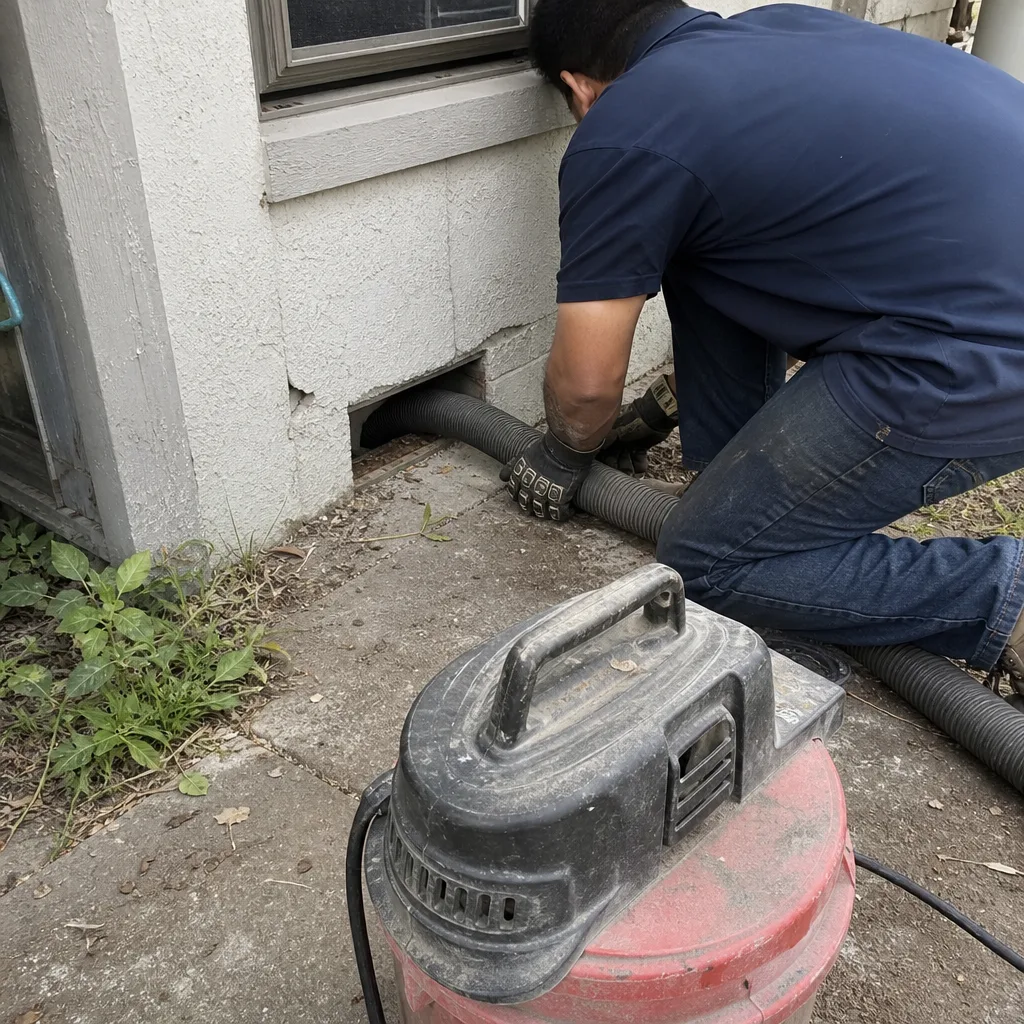
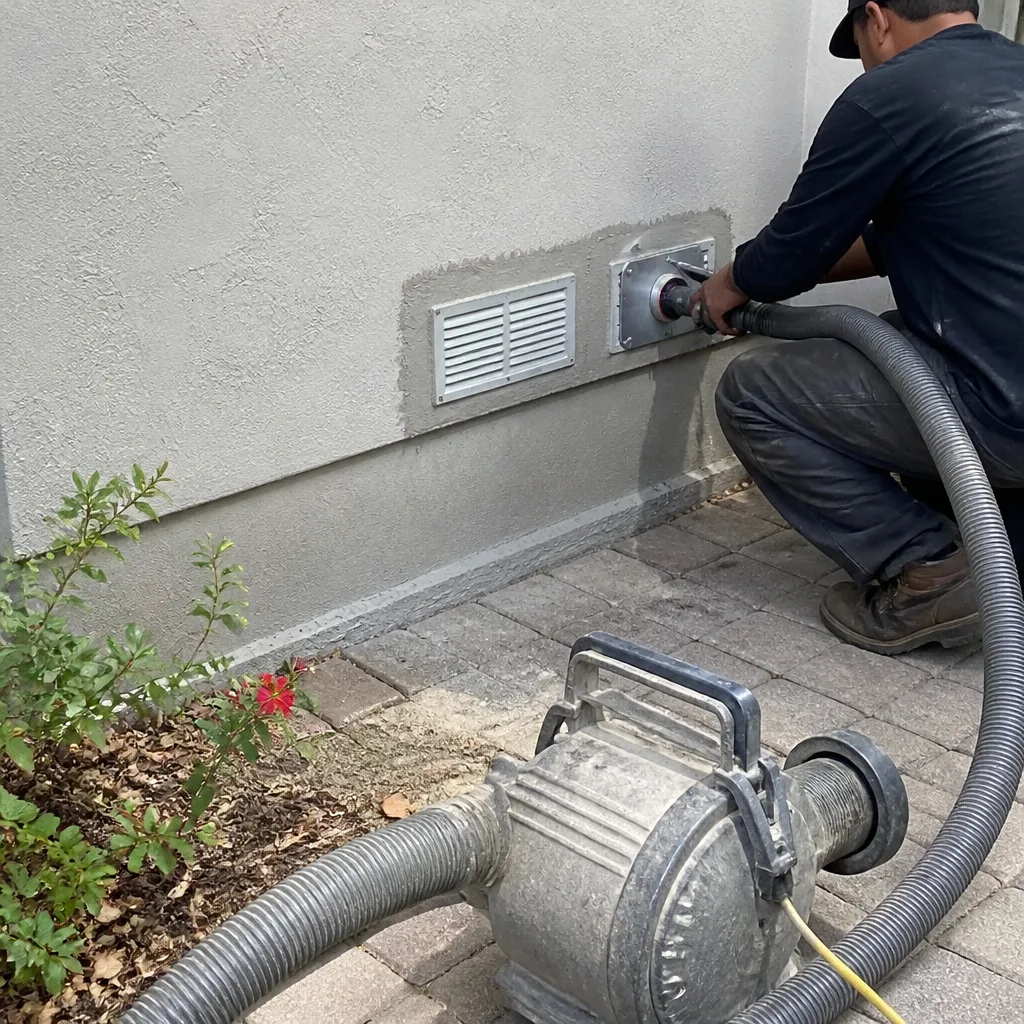
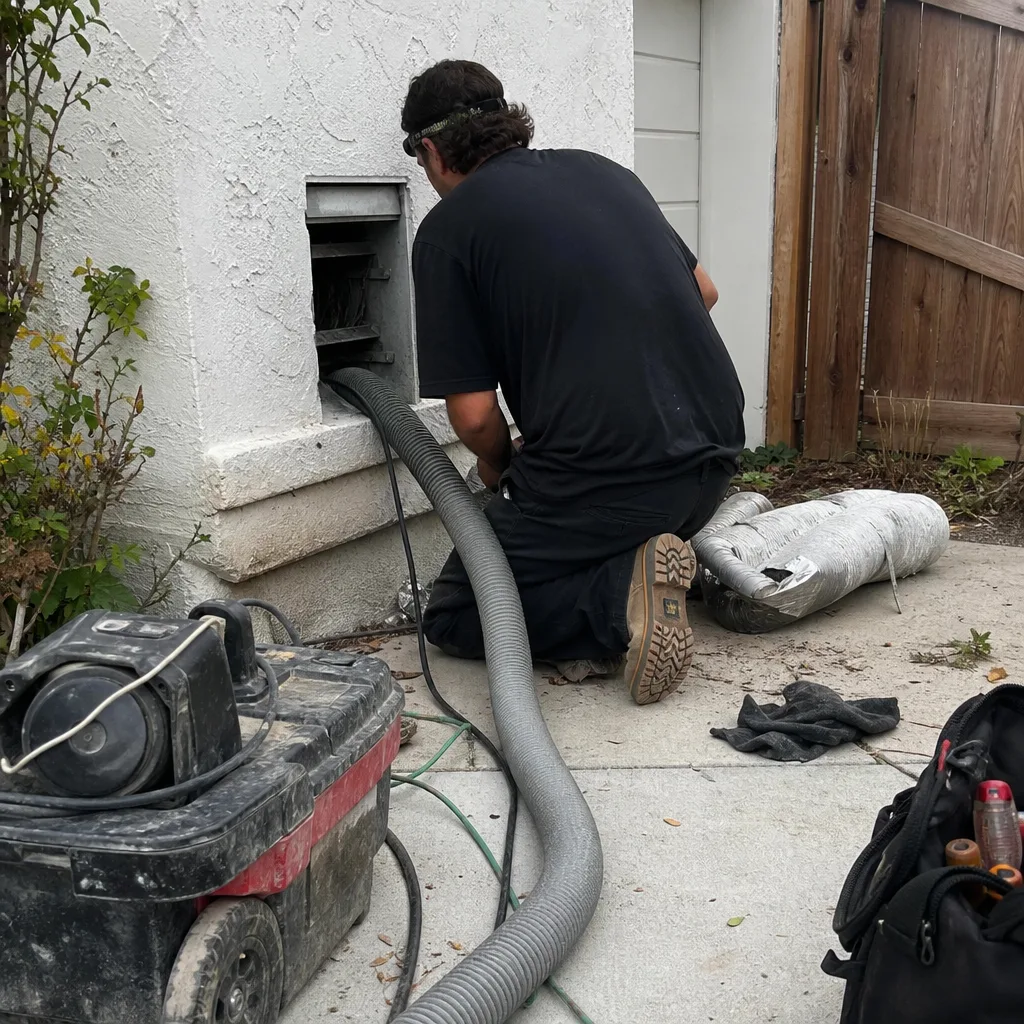
- Skipping dryer vent cleaning because it’s “included.” Dryer vent cleaning is a different service than duct cleaning, requiring different tools and access points. A company that throws it in “free” with a duct cleaning is treating it as a checkbox, not a fire-safety appointment. In Pacific Beach, where lint accumulates quickly in humid coastal air, dryer vent cleaning in Pacific Beach deserves the same specificity of equipment and process as duct work.
- Assuming a clean furnace filter means clean ducts. The furnace filter catches what passes through the return side. It does nothing for contamination already inside your ducts, and it doesn’t address breaches that pull unfiltered air into the system. A clean filter and filthy ducts are not mutually exclusive.
- Not asking about repair capability. Cleaning reveals damage: disconnected sections, crushed flex, rusted runs. If your contractor can’t repair what they find, you’ll need a second contractor to finish the job – and the first one will leave you with a clean system that’s still leaking conditioned air.
- Waiting until you see dust on the registers. Visible dust on register covers is the final stage of contamination, not the first. By the time you see it, the duct interiors have been accumulating debris for months or years. Pacific Beach’s coastal environment accelerates this accumulation. Regular inspection catches problems earlier and keeps cleaning costs lower.
When to Call a Professional
If you’ve never had your Pacific Beach home’s ducts inspected, or if it’s been more than five years since the last cleaning, now is the right time to schedule an assessment. Specific triggers include: visible dust accumulation on registers or walls near vents, unexplained increases in energy bills during cooling season, rooms that never seem to reach the thermostat temperature, a musty or stale odor when the system starts up, or recent renovation work that generated construction dust. If you’ve moved into a home where the previous owners had pets, a cleaning should be on your first-year list. Fairway Air Duct Cleaning offers free estimates in Pacific Beach – call (866) 241-3526 to schedule one. We’ll inspect your system, document what we find, and give you a straight answer about whether cleaning is warranted.
Frequently Asked Questions
A full-system air duct cleaning for a typical single-family home in Pacific Beach ranges from $350 to $650, depending on home size, system configuration, and contamination level. Larger homes with complex duct layouts or heavy sand accumulation can run higher. A legitimate quote will be based on system specifics – number of registers, linear feet of ductwork, accessibility – not on a per-vent teaser price. Call (866) 241-3526 for a flat-price estimate based on your home’s actual system.
You know the work was done when the contractor provides before-and-after photos of your duct interiors, taken from the same angles, showing clear visual evidence of debris removal. You should also be able to see debris collection happening during the job, either through a transparent collection chamber or by observing the extraction system in operation. A contractor who won’t document results is asking you to take their word for it – and you shouldn’t have to.
Cheaper quotes usually come from companies running consumer-grade equipment – shop vacuums or adapted carpet cleaning machines – that cannot produce the negative pressure needed for source removal across a full duct system. They’re cheaper because the equipment is cheaper, the training is minimal, and the job takes less time. The result is a partial cleaning that leaves the most stubborn debris – the sand, salt residue, and compacted dust in your return runs – exactly where it was.
For most Pacific Beach homes, we recommend cleaning every four to six years, with annual inspections in between. Homes within walking distance of the beach, homes with multiple pets, or homes where residents have allergies or asthma may warrant more frequent cleaning – every three to four years. The coastal environment accelerates contamination accumulation compared to inland San Diego, so the standard “every seven years” advice doesn’t apply equally here.
A hardware store vacuum maintains useful suction across about six feet of hose. Our Rotobrush and Nikro systems maintain negative pressure across the full length of your duct runs – 40 to 80 feet or more – while providing simultaneous agitation and extraction. That’s the difference between knocking dust loose near the register and actually removing contamination from the entire system, including the return side and the air handler cabinet.
Yes, and it should be treated as a distinct service with its own equipment and process, not an add-on. Pacific Beach’s humid coastal air causes lint to compact against vent walls more aggressively than in dry climates, increasing fire risk and drying time. A proper dryer vent cleaning in Pacific Beach involves specialized brushes and extraction tools designed for the narrow diameter of vent runs – not the same equipment used for duct work. Call (866) 241-3526 to schedule both services or discuss whether one is more urgent for your home.
The Bottom Line
Choosing the right air duct cleaning brand in Pacific Beach comes down to equipment, process, and proof. The contractor’s name matters less than the machine they’re running – Rotobrush or Nikro professional systems rather than consumer-grade vacuums – and whether they follow NADCA’s ACR standard for source removal. A specialist who cleans ducts every day, documents results with before-and-after photos, and can repair what cleaning reveals is worth far more than a generalist running a low-price special. The coastal conditions in Pacific Beach – salt air, sand infiltration, daily humidity cycles – make professional-grade cleaning not a luxury but a necessity. Ask the five questions. Demand the photos. And call (866) 241-3526 when you’re ready for a straight assessment.
Written by the team at Fairway Air Duct Cleaning, serving Pacific Beach since 2014.
See the difference
 Before
 After
 Before
 After
 Before
 After